
 It has been a wild, adventure filled ride down the #RooseveltRiver. There have been many twists and turns; rapids; calm, still waters; fast water and waterfalls. No matter the type of water, there have been lessons to learn. I think one of the most important lessons I learned is, that like a river, the lessons are always changing and never the same. The gift of a great teacher is a lesson that teaches anew as life changes around you and as you change with life.
There is an often misquoted line from George Santayana from his book “Reason in Common Sense” that goes “Those who cannot remember the past, are condemned to repeat it.” As Dan Miller will remind you, history DOES repeat itself. It is those who do not learn its lessons that are condemned to repeat the mistakes of the past. And what worked in the past, may not work this time around.
“Train for the future”. Think about that for a minute. On the surface, it seems to contradict the premise of this whole series. How do you “train for the future” if you are studying the past? Personally, I am a business technologist (ok, I am in IT, but I am not an “IT Guy”, I am a business person that understands technology and how to apply it to business). Our roles are dramatically changing and at lighting fast speed. If we don’t have an eye on the future, we will become irrelevant overnight. If we don’t understand the past and the lessons it provides we will become dinosaurs. If we don’t provide solutions today we will fail. “Train for the Future”…what does that mean for you, in your world?
Lessons from the #RooseveltRiver
2013 – The Year I Canoed with Theodore Roosevelt – A (somewhat) introduction to my study of Theodore Roosevelt and some of the lessons of leadership I encountered.
6th Grade and my Journey on the #RooseveltRiver Begins – Accenting a strength can help you overcome a weakness.
Lola Takes a Walk on the Wild Side of the #RooseveltRiver – A lesson in persona from my dear brother Mitchell (and Teddy, of course).
Rapids on the #RooseveltRiver – Living Life on the Edge – A leader lives life on the edge, pulling those around her out of the center.
Blue Bloods’ Frank Reagan Paddles the #RooseveltRiver – TV imitates life and teaches us all a lesson in leadership.
Two Keys to Great Leadership – The Rough Riders Join #RooseveltRiver – Lessons from history can reveal the keys to Leadership (sorry, you have to read the post to find the keys…didn’t think I was going to tell here, did you?)
1,000 Words vs. an Image – Snapshots from the #RooseveltRiver – Great leaders know the power of using images to convey ideas.
Dad Paddles the #RooseveltRiver – My REAL hero joins Teddy and I on the river for a lesson in leadership.
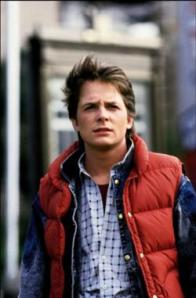
Marty McFly Changes History on the #RooseveltRiver – Travel “Back to the Future” to learn about decision points and how great leaders leverage them.
The #RooseveltRiver Flows into the River of Doubt – Poor planning can lead to catastrophe. A great leader plans and organizes before executing.
Death Along the #RooseveltRiver – Relationships formed along the river are vital to us as leaders and as human beings.

www.whitehouse.gov
A river, like life, comes to an end. Some rivers simply disappear into the ground, all of its energy drained away. Some flow into lakes or oceans becoming indistinguishable. Many join with other rivers to create new, even more powerful rivers.
So many lessons…ever changing lessons. I would love to know which of these lessons stand out for you. Please leave a comment or send me a note. Please share the lessons with your network. Remember, “Those who cannot remember the past, are condemned to repeat it.”
#RooseveltRiver is my year long exploration with Dan Miller of Historical Solutions into leadership using the backdrop of history and the life of Theodore Roosevelt. To read more in this series, select “Roosevelt River” from the Category drop down on the right.
If anything you read here or in other posts strikes a chord, I would love to hear from you. Leave a comment, hit me up on Twitter (@jtongici), find me on LinkedIn, or Google +.
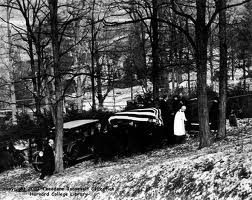 It was a cold, gray January day. The wind picked up the dusting of snow from the ground and flung it into their faces, stinging like needles. Tears froze to wind burned cheeks. The casket was slowly lowered into the frozen ground. A lone bugler played taps. Slowly, one by one, the people who had gathered, made their way down the 26 steps, down the long hill, and out of the cemetery until a lone figure remained. He stood motionless. His gaze locked on the hole before him. Tears stained his ruddy cheeks. His long coat flapped in the wind. His lips moved as if talking. Was he saying goodbye? Was he saying a prayer? Was he saying words of forgiveness to his now dead friend?


 A couple years ago I wrote a short eBook titled “
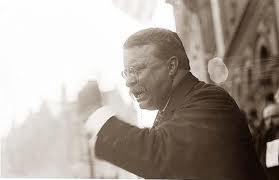 roosevelt speaking and you will find hundreds of pictures but you would be very hard pressed to find any of him standing still behind a lectern. You will see him teeth bared, leaning forward, fist pounding in hand, or arms spread wide. Some of these were very much thought out, others were as natural to him as speaking itself. The audience was captivated, he was talking with them (not TO them), he was their voice. Roosevelt once declared “I’m am not public opinion, I am the public”, a bold statement certainly, but at the height of his presidency he was absolutely correct.
 room, “THAT is the first time I have EVER understood technology!” Suddenly that petrified sixth grader wanted to jump for joy, wanted to slap high five with someone, anyone. Even now as I write this, I get chills. How did it happen? How did we get our point across? An image…permit me to go back in time a bit.
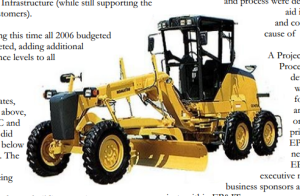 This was a company that made multi-million dollar decisions every day. How did they get comfortable with the risk versus the reward? They used a very tried and true process. The development group would envision a project, do their research and then
 build what was called internally “an Investment Memo”. The Investment Memo had 20 or 21 distinct sections, The Executive Summary, the elevation drawings, market surveys, risks, financial proforma and others. What if we put the strategic plan in the form of an Investment Memo? We could use the analogy that building IT systems are like building a building. But…no one on my team, myself included, had ever written an Investment Memo, we didn’t even know all the sections or the lingo. I reached out to a coworker who worked in the construction department. He had an interest in IT, was young and passionate. Would he help me?
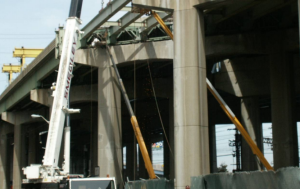 w to his hometown of Charlotte. He and I literally locked ourselves in my hotel room for three days. The result? An image! The image of a building, complete with elevation drawings and a proforma. An image that everyone in the room would understand. (Thanks to Matt Cashatt, for working his day job and burning the midnight oil with me for three days…and thanks to his wife for letting me impinge on their family time!)

 What makes great leaders great? Is there a moment, an event, that you can point to and say “this is when they became great”, or “this is when they made history”, or even “this is when they became presidential”? Is there a catalyst, an event, where they stand up and lead? Meriwether Lewis was Thomas Jefferson’s secretary, William Clark was hanging out in a cabin in the southern Indiana territory (sorry, I HAVE to throw my heroes in the mix, I know they weren’t presidents), Lincoln was a no-named lawyer from Illinois, Benjamin Harrison played ostrich and stuck his head in the sand for the first two years of the civil war, Roosevelt was considered for the head of street cleaning in New York, and Eisenhower was a mid-level officer primarily known for being a good football coach. What happened? How did they end up in history books? Why are we (read “me”) still talking about them 50, 100, and 200 years later?


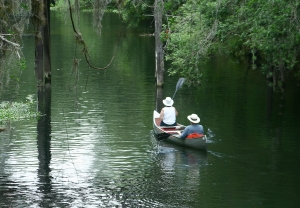

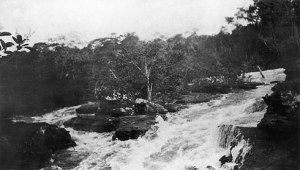
 Isn’t that the definition of being a leader, though? Living on the edge, continually pulling those around you out of the center? It is difficult, like being caught in a whirlpool above a rapids (hey this is a series about a RIVER), the closer to the center you are the harder and harder it pulls you in. The further and further away from the center, the swimming gets easier, but you can’t pull anyone with you. If you get too far on the edge you run the risk of being thrashed about in the rapids.