On June 13, 2o17 I was honored to be the headliner for Sparks Talk’s Fifth Anniversary. The transcript of this timed-talk follows.
It’s 1780, August. You are a young Shawnee teen. Early in the afternoon you climb up the ridge east of the village and look down across the valley. The summer sun beats down relentlessly on the village. The air is still, smoke from smoldering cooking fires creates a cloud throughout the clearing and tickles your nostrils as you breathe. Along the base of the hill, several small cabins form a circle. To the east a stockade sits atop the next hill. Fields of corn stretch for miles in each direction along the lazy river.
Some of the younger children play in the dirt near several of the cabins. Mothers keep a watchful eye while they go about their chores in preparation for the evening meal.
A dog wanders between the cabins, its tongue drooping from its mouth as it pants. It enters the cool shade of a doorway, only to reemerge a second later with a yelp as one of the men inside swats at it so the council meeting is not disturbed.
Inside the cabin, the men are engaged in a great debate. The sound of their voices drift up along with the smoke.
You see motion in the corn…you see the flash before you…Crack! The sound of gunfire shatters the afternoon stillness. Soon war cries filled the air from the west of the village. The long knives have arrived! The smell of burnt gunpowder mixed with the smoke of the fires and burns your eyes.
Why I was standing in a park in the middle of Ohio reading an historical marker on July 4, 2000 is a story for another day. What we are going to explore today are the connections. The connections that drew me to the past and propelled me into the future.
The sign I was reading was in a park dedicated to the Battle of Piqua. A battle between the Kentucky militia led by George Rogers Clark against a tribe of the Shawnee nation. What boy from Indiana doesn’t feel a connection to George Rogers Clark?
I read more of the markers. One was dedicated in 1976. I graduated high school in 1976. Connection.
A Shawnee boy survived the battle. His name was Tecumseh. I attended Camp Tecumseh YMCA camp as a kid. Connection.
Tecumseh grew up and along with his brother, The Prophet, led the Indian forces in the The Battle of Tippecanoe near Lafayette against the US forces led by William Henry Harrison. In 1976 I graduated from…William Henry Harrison High School…connection. The name of our school newspaper? The Prophet! Connection!
I hated history class in high school…and now I was hooked. Over the next decade, Carmen and I would spend every minute of vacation retracing the Lewis and Clark Expedition. You see, Clark was the younger brother of George Rogers Clark. We discovered dozens and dozens of connections. We discovered a deep love for our country, and we discovered a shared love of history. In a sense, newlyweds when we embarked on these journeys, we discovered each other. Ah, but I’m not here to talk about our love story either, for that, you have to wait until my book “The Lewis and Clark Will Never Die Tour” is published!
All these connections are interesting…and we could talk about them all night…well, for another 6 minutes or so. But, what if I could show you how you could use those connections with the past to live in the present and plan for the future? Now THAT would be really interesting!
For the last five years, did you catch that connection? Five years…same time Sparks was launching. I told you connections with the past are everywhere, anyway, five years ago, I started working with an executive coach. Dr. Dan Miller’s approach to coaching is something he calls Creative Conversations. Through these conversations we study the life, or river as Dan calls them, of an historical figure and discuss points in their lives and how they relate to a problem or a challenge I am wrestling with today.
Over this time span, we have studied Theodore Roosevelt, Dwight Eisenhower, William Sherman and Abraham Lincoln, albeit briefly. One of the interesting aspects of immersing yourself in history this way is the number of connections you will discover. Now I know those connections were always there, the study just raised your awareness of them.
When we embarked on our exploration of the Roosevelt River, our theme was Communication, Speaking Truth to Authority and Creating an Environment of Candor. The struggle to speak truth to authority was deeply ingrained. I grew up the son of a baptist minister. Children of the minister were to be seen and not heard, you certainly didn’t speak truth to his authority, especially when his authority was HIS authority!
Roosevelt ALWAYS spoke truth to authority. For him it seemed to come naturally. The lessons over the year were endless. However,, one the stuck out for me was his use of gestures. He was a master at using a gesture to make his point. I realized my dad, was a master of using gestures in his sermons. In some ways I adopted my favorite gesture of his, that of getting out from behind the podium and walking about to engage the audience. However, the key lesson here wasn’t the gesture itself, it was when to NOT use the familiar gesture to make a point. To stop walking around the platform and stop, freeze, and make a point.
As my career progressed and I began to be seen as a leader not just of my team, or even of my company, but in the community, this leadership in a new stage need exploration. Enter Dwight D. Eisenhower and the exploration of adapting to new issues and working with different stakeholders. What better model to use than the military man that rose through the ranks to become the leader of the Allied Forces in WWII and then on to the presidency. Moving from a command and control organization to one of politics and influence.
As Eisenhower established his leadership he saw a connection to two seemingly unrelated advances in warfare. This first was the mechanization of, well, just about everything. The Cavalries of WWI were a thing of the past, but unlike horses, jeeps and trucks need fuel. He leveraged that in his battle plans both for his forces and against the enemy. At the same time aircraft became a strategic part of warfare. Eisenhower was able to see the relationship between the two in a way few others did. For me, as an IT leader, it was about the cloud. But not the cloud alone, it was what it could bring when it was joined with organization agility. Together the two can have a multiplying effect. Look for the relationships in the seemingly unrelated!
Our final example come from the life of William T. Sherman, the civil war general. William Tecumseh Sherman…see how I did that? Connections! The theme we explored is “A Plan is a Contract between the past and the future”. Sherman had a plan. Sherman had a grand plan. His plan didn’t always work. He learned, he adjusted, and ultimately succeeded.
Sherman was involved in two battles near the town of Chickasaw Bluffs. In the first he suffered an embarrassing defeat. Some time later, he and Grant attacked the forces at Chickasaw Bluffs and were successful. Grant had used a strategy Sherman thought would never work. He saw, he learned and he acknowledged. We need to support and observe other leaders and other strategies, and adapt our plans for the future.
These are but a few of the lessons of the last five years. Connections to the past are all around us. Lessons from the past out boundless, and ever changing. Even now as I write this, I see new insights, new lessons, and opportunities to impact the future. As you look back over the last five years, over the last 50 years, 100 years, longer, what connections reveal themselves? What lessons are there to be learned in the present to plan for the future?


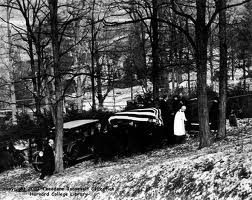 It was a cold, gray January day. The wind picked up the dusting of snow from the ground and flung it into their faces, stinging like needles. Tears froze to wind burned cheeks. The casket was slowly lowered into the frozen ground. A lone bugler played taps. Slowly, one by one, the people who had gathered, made their way down the 26 steps, down the long hill, and out of the cemetery until a lone figure remained. He stood motionless. His gaze locked on the hole before him. Tears stained his ruddy cheeks. His long coat flapped in the wind. His lips moved as if talking. Was he saying goodbye? Was he saying a prayer? Was he saying words of forgiveness to his now dead friend?


 A couple years ago I wrote a short eBook titled “
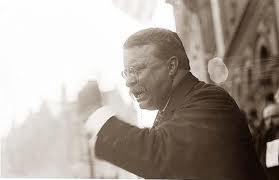 roosevelt speaking and you will find hundreds of pictures but you would be very hard pressed to find any of him standing still behind a lectern. You will see him teeth bared, leaning forward, fist pounding in hand, or arms spread wide. Some of these were very much thought out, others were as natural to him as speaking itself. The audience was captivated, he was talking with them (not TO them), he was their voice. Roosevelt once declared “I’m am not public opinion, I am the public”, a bold statement certainly, but at the height of his presidency he was absolutely correct.
 room, “THAT is the first time I have EVER understood technology!” Suddenly that petrified sixth grader wanted to jump for joy, wanted to slap high five with someone, anyone. Even now as I write this, I get chills. How did it happen? How did we get our point across? An image…permit me to go back in time a bit.
 This was a company that made multi-million dollar decisions every day. How did they get comfortable with the risk versus the reward? They used a very tried and true process. The development group would envision a project, do their research and then
 build what was called internally “an Investment Memo”. The Investment Memo had 20 or 21 distinct sections, The Executive Summary, the elevation drawings, market surveys, risks, financial proforma and others. What if we put the strategic plan in the form of an Investment Memo? We could use the analogy that building IT systems are like building a building. But…no one on my team, myself included, had ever written an Investment Memo, we didn’t even know all the sections or the lingo. I reached out to a coworker who worked in the construction department. He had an interest in IT, was young and passionate. Would he help me?
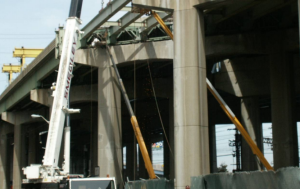 w to his hometown of Charlotte. He and I literally locked ourselves in my hotel room for three days. The result? An image! The image of a building, complete with elevation drawings and a proforma. An image that everyone in the room would understand. (Thanks to Matt Cashatt, for working his day job and burning the midnight oil with me for three days…and thanks to his wife for letting me impinge on their family time!)

 What makes great leaders great? Is there a moment, an event, that you can point to and say “this is when they became great”, or “this is when they made history”, or even “this is when they became presidential”? Is there a catalyst, an event, where they stand up and lead? Meriwether Lewis was Thomas Jefferson’s secretary, William Clark was hanging out in a cabin in the southern Indiana territory (sorry, I HAVE to throw my heroes in the mix, I know they weren’t presidents), Lincoln was a no-named lawyer from Illinois, Benjamin Harrison played ostrich and stuck his head in the sand for the first two years of the civil war, Roosevelt was considered for the head of street cleaning in New York, and Eisenhower was a mid-level officer primarily known for being a good football coach. What happened? How did they end up in history books? Why are we (read “me”) still talking about them 50, 100, and 200 years later?