
Part 5 of the series on Corporate Connectivity, other posts include: N.C.I.S. Indianapolis – The Pilot, N.C.I.S. Indianapolis – Episode 1: Networks, N.C.I.S. Indianapolis – Episode 2: Communication (and Collaboration), N.C.I.S. Indianapolis – Episode 3: Information, and N.C.I.S. Indianapolis – Episode 4: Systems.
So, are you asking yourself, “Why are we doing this?” or “What’s in it for me?” The answer will differ depending on your view of the organization.
If you are one of those we serve, you will benefit from a much more holistic approach to assisting you with the barriers and roadblocks you may face.
As a customer, shopper or donor, we will be able interact with you on a much more personal level, understanding what you want and need from your experience with us.
Our partners will have a much more cohesive view of our relationship with them.
We will be able to communicate to the central Indiana community the economic impact of our programs and services.
And last, but certainly not least, our employees will experience an organization in which information flows throughout the organization, where ideas for innovation can come from anybody, and where collaboration enables us to achieve more together than we ever could apart.
In their book, “The Social Organization,” authors Anthony J. Bradley and Mark P. McDonald raise the questions: “What if you could tap into the full talent, creativity, experience and passion of your employees, customers, and suppliers? What if you could minimize the constraints imposed by specialization and compartmentalization? What if you could retain or recapture some of the benefits, human and organizational, of that collaborative start-up without losing the glue that currently holds the organization together?”
This is the promise of N.C.I.S.: To leverage the work of Marketing, Technology Solutions and our cross functional teams — the Corporate Connectivity Committee and Goodwill Connections Team — to transform Goodwill Indy into a social organization; an organization that “strategically applies mass collaboration to address significant business challenges and opportunities” and further offers opportunities, provides services, and leverages its resources with those of others to improve the education, skills, employability and economic self-sufficiency of adults and the future employability of young people.
If anything you read here or in other posts strikes a chord, I would love to hear from you. Leave a comment, hit me up on Twitter (@jtongici), find me on LinkedIn, or Google +.
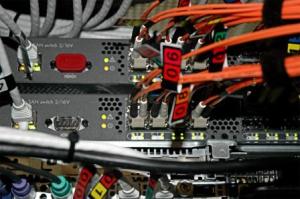 The underlying systems that tie all of this together are evolving at a lightning pace. Driven by the continuing consumerization and “appification” of IT, we have seen an explosion of technology, including smart phones and tablets. In 2012, for example, the number of smartphones in the market exceeds 1 billion, and it is estimated that by 2015, tablet sales will exceed that of traditional PCs.
 The same could be said for data. “Data, data everywhere, but no information to use.” In 2012, approximately 2.5 quintillion (2.5 x 10¹⁸) bytes of data were created every day! The industry has tagged this with the name “Big Data.” Making sense of all that big data and turning it into actionable information has given rise to a new type of position in many companies, that of “data scientist.”
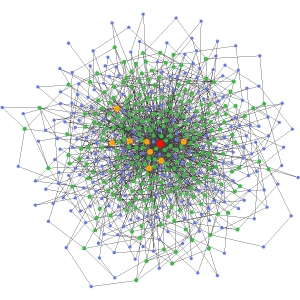 In his book, “The Future of Work,” Thomas Malone compares the transformation occurring in business today to the evolution societies have experienced. In antiquity, societies were made up of bands of people. They were very decentralized and unconnected. During the Middle Ages, kingdoms brought these bands under centralized control, but they were still largely unconnected from the central power. Democracies enabled society to decentralize and still remain connected.
 organizations, mass collaboration, big data, the future of work, and some technology thrown in for good measure!