Sunrise - Columbia River Gorge


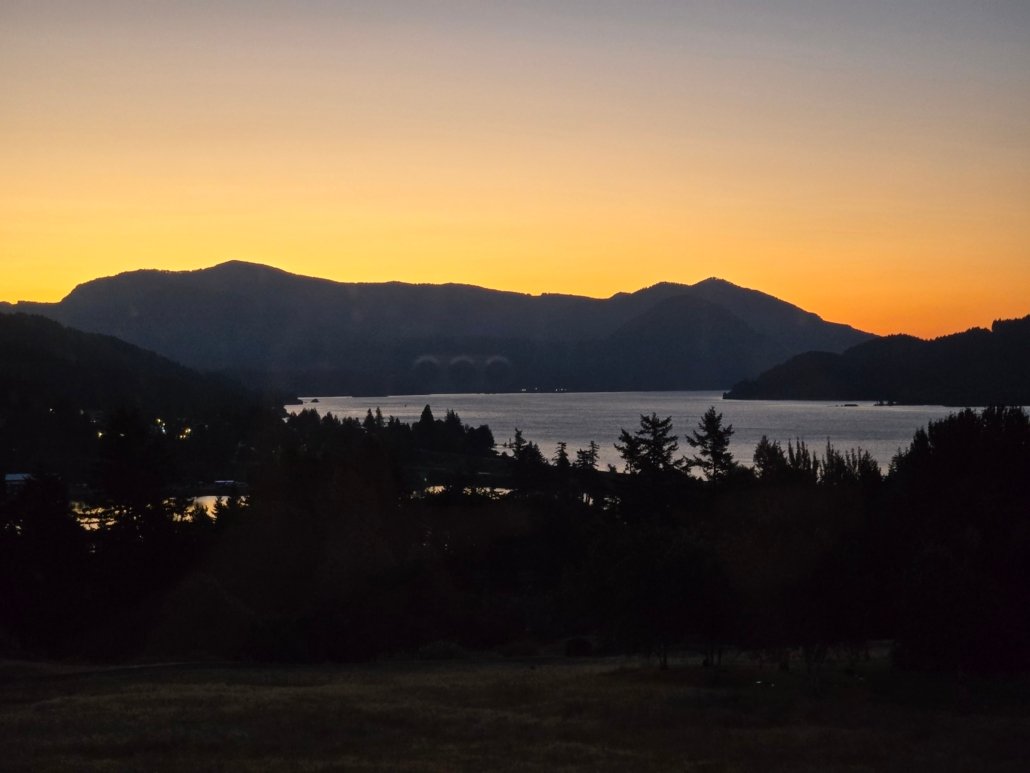
The sky held its breath in quiet layers—deep charcoal at the top, soft lavender below it, and then a warm blaze of amber and gold stretched across the horizon. It didn’t shout. It waited.

The Columbia River shimmered in muted silver, calm but full of knowing. The mountains stood as shadows, outlined like memory—solid and watching. And the land below, still cloaked in darkness, whispered rather than spoke.

I stood at the window and let it rearrange something inside me.

It wasn’t just beautiful. It was hallowed — sacred.

It’s made me think about all the places I’ve stood that carried that same quiet gravity. The ones that slowed my step and softened my voice. The ones that felt like they were waiting for someone to listen.

When we first began the journey that became Uncharted Moments, we thought we were following the Lewis and Clark trail. And we were…at first. But over time, we realized something more profound was happening. We weren’t just following their story. We were writing ours.

And along the way, some places didn’t just mark a location—they marked something holy. Not in the traditional sense. But in the sense of knowing, somehow, that you’re standing in a place that matters.

There was the grave of Jim Morrison in Paris, where Carmen and I sipped wine from plastic water cups under the watchful eye of a patient gendarme. We didn’t speak. We didn’t need to. The silence did the work.

There was Locust Grove in Louisville, where the spirit of the Clark family felt close enough to touch, and where York’s story finally began to be told with the gravity it deserves.

There was Traveler’s Rest, where archaeologists proved what many already felt in their bones: they were here. Lewis and Clark camped on this very ground. And you could feel it.

There was the tower overlooking the confluence of the Missouri and Mississippi Rivers, where Carmen and I asked ourselves a question we weren’t quite ready to answer: What will you do when the journey is over?

And, of course, a small log chapel with a window that frames the incredible peaks of the Grand Tetons — more sacred than the massive cathedrals of Europe. 

But none of them hit quite the way this Gorge does.

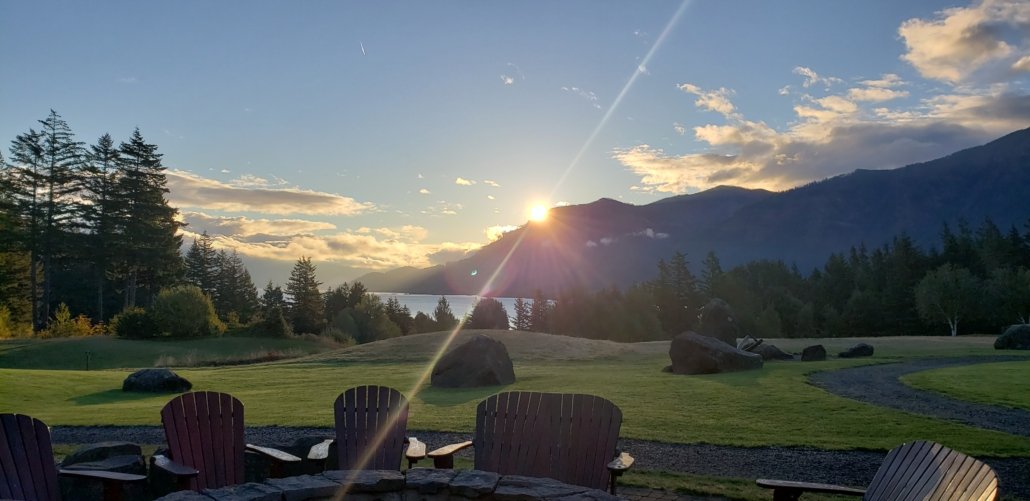
Maybe it’s the sheer force of the place. Maybe it’s the echo of their journey nearing the ultimate goal of the ocean. Or, perhaps it is the voices of generations of those who called this gorge home for millennia before the expedition arrived. Maybe it’s because Carmen and I stood together in this very stretch of land, looking out at the same water I’m watching now. Perhaps it’s because I return to this place more often than any other place on the trail. 

Some places don’t just get visited. They get absorbed. They live in you.

Uncharted Moments is full of places like that. They may look like highway pull-offs, forgotten cemeteries, trailheads, and riverbanks. But they’re more than that. They’re the places where something changed. Where the moment turned.

Where the ordinary paused just long enough to become holy.

If you’ve ever stood in a spot that made you go quiet without knowing why—you’ve been there too.

And you know what I mean when I say: some ground is hallowed—even if the only marker is the way it rearranges you.

— Jeff


P.S. Over the next few months, I will be sharing more from my upcoming book, Uncharted Moments Along the Lewis and Clark Trail – A Love Story. If you want to be in the know as it proceeds through the publishing process, sign up for my newsletter in the side panel of this page!

(AI-generated image)


Goin’ to Kansas City

Kansas City, here I come

Goin’ to Kansas City

Kansas City, here I come*


Kansas City, Again (and Again): Four Versions of Me, One Book That Ties Them Together

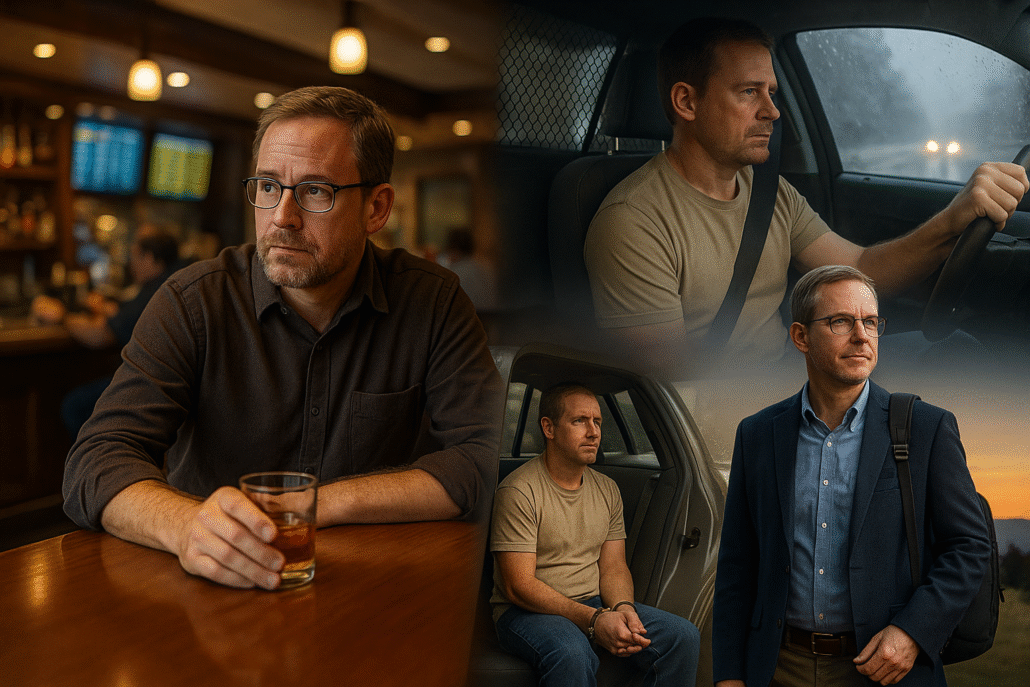
I’m sitting in the Kansas City airport bar, bourbon in hand, watching travelers drift by. I’m on my way west—to Portland, then up the Columbia to Stevenson, Washington—where I’ll be guiding The Lewis and Clark Experience: A New Way Forward, a leadership program I helped build and now deliver several times a year.

This is my first business trip in nearly ten months—leaving Carmen is getting harder and harder. But this isn’t just about the flight or the program.

It’s about the city.

Because Kansas City has shown up in my life more times than I ever expected. And each visit marked a shift. A pivot. A story that wouldn’t leave me alone.

The Handcuffs, Yes, Handcuffs

The first time I came to KC, it was to visit my brother, who was based here as a pilot. I’d just landed when he called and said, “Wanna have dinner in Atlanta?”

Wait, what? I  just got here.

He had a round-trip flight before our weekend could start. This was before 9/11, so when he pulled his plane, already loaded with passengers, to the gate, I climbed on board. We flew to Atlanta, had dinner, and then flew back.

That was just the start.

Later that night, we hit a bar popular with pilots. My brother’s girlfriend joined us. After a few drinks, she wisely decided not to drive. I chivalrously offered to take her car and follow my brother home. Because, hey, I was ok.

We were less than two blocks from their apartment when I saw flashing lights. A few failed “stupid human tricks” later, I was handcuffed and riding in the back of a police car. Fortunately, I passed the breathalyzer at the station. But the moment stuck with me.

Not the kind of moment you put on a postcard. But the kind you don’t forget.

The Fourth of July  — Two Hundred Years Apart

This one’s sweeter. My Carmen and I would return to Kansas City during Leg Six of our Lewis & Clark Journey — the first Fourth of July celebrated west of the Mississippi…OUR first Fourth of July west of the Mississippi. It was a trip that delivered several Uncharted Moments — the hawk returned, a beer slogan on a t-shirt, and the idea of buying an ARRRR VEE.

We spent time on that trip in Kansas City, Leavenworth, and Atchison. Didn’t go anywhere near the airport. It wasn’t our longest trip in terms of miles, but it was the longest trip in terms of days, at least for the first six legs of our journey. 

It is also the trip where the question was asked. The question that would haunt me for years. “What will you do when all this Lewis and Clark stuff is over?” Over? BAM!

I didn’t have an answer then. I do now. Write a book.

Stuck in Kansas City

My third visit was more suit-and-tie. A client’s CIO was tense, and I was sent in to smooth things over. The meeting went great.

Then the snow came.

A wallop of a storm hit. Flights canceled. Roads iced. But I had to get home—had a keynote the next morning that had taken months to prepare.

I took an Uber to the airport anyway. Rented a car. Drove across I-70 in whiteout conditions, barely breaking 30 mph until St. Louis.

I made it. Delivered the keynote. And realized I couldn’t live in that kind of tension anymore. A month later, the pandemic hit. I asked to be laid off…and pursued my side gig full-time.

Another pivot. Another Kansas City.

Kansas City  — Again

So here I am now—version four of Jeff, overloading on memories before I fly out. I left my Carmen at home this morning; we haven’t been apart in ten months. Her wave goodbye was strong, but when I pulled out of the driveway, I felt the familiar ache of being away.

I ride these departures hard. These days, they feel heavier—and yes, more sacred.

The Ties That Bind

Four visits. Same city. But the deeper connection isn’t geography—it’s transformation.

The handcuffs taught humility.

The Fourth of July taught us to listen with open hearts.

The snowstorm taught resilience.

And this latest trip? It reminds me that legacy is built in every goodbye, every return, every story we carry forward.

That’s what Uncharted Moments is about. Not just the places we visited, but what those places revealed.

I didn’t set out to write a book about Kansas City. But somehow, Kansas City wrote itself into the book.

So here’s to the bourbon, the t-shirts, the snowdrifts… and yes, even the handcuffs. They’re all part of this story. And soon, they’ll be part of yours…well, maybe not the handcuffs.

– Jeff

P.S. Over the next few months, I will be sharing more from my upcoming book, Uncharted Moments Along the Lewis and Clark Trail – A Love Story. If you want to be in the know as it proceeds through the publishing process, sign up for my newsletter in the side panel of this page!


*Songwriters: Jerry Leiber / Mike Stoller – Kansas City* lyrics © Jerry Leiber Music, Armo Music Corp., Fort Knox Music Co


If you’re a regular reader of Rivers of Thought, you’ve probably noticed I’ve been unusually quiet over the past year. No new reflections, no trail updates, no musings on leadership or love or life. Just… silence.

Not because I ran out of things to say.

But because life, as it often does, had other plans.

The past year has been a season of deep change—personally, spiritually, and emotionally. I won’t go into all of it here (not yet, anyway), but I will say this: there have been moments that brought me to my knees, and moments that reminded me—gently, fiercely—why I write in the first place.

So here I am, surfacing from the quiet to share something that’s been two decades in the making.

I’ve finished the manuscript for my next book.

It’s called:

Uncharted Moments – Along the Lewis & Clark Trail – A Love Story

It’s not a history book, though history plays a starring role.
It’s not a love story, though love is its heartbeat.
It’s not a memoir, though my fingerprints are on every page.

It’s a journey—along rivers, through loss, into wonder.

Twenty years ago, I found myself drawn to the story of Lewis and Clark. What began as historical curiosity quickly became something more personal. Carmen and I started tracing the trail together—not just on maps, but in life. We followed in the footsteps of the Corps of Discovery, yes—but we also discovered each other, one sacred, uncharted moment at a time.

This book tells that story.
Of the rivers we crossed. The history we absorbed.
The laughs. The tears. The whispered conversations in campgrounds and museum halls.
The epiphanies that hit you like a thunderclap… and the ones that sneak in like mist over water.

Uncharted Moments is about finding your path—not by following someone else’s map, but by walking it together.

In the weeks to come, I’ll be sharing more: a glimpse at the cover, some behind-the-scenes stories, a few treasures that didn’t make it into the manuscript, and ways you can be part of this next adventure.

For now, thank you for being here—for sticking around through the silence.
I can’t wait to bring you along on this new leg of the journey.

Still paddling,
Jeff


Here is a little teaser:

Excerpt from Uncharted Moments: Along the Lewis & Clark Trail — A Love Story

We arrived in Philadelphia with one goal in mind: to see the journals.

Not just any journals—the journals. The ones penned by Meriwether Lewis and William Clark themselves. The ones that had guided us, inspired us, haunted us over thousands of miles and twenty years of travel. I had traced their words across maps, through dusty archives and riverside trails, always chasing the next uncharted moment.

The American Philosophical Society Museum was closed. Not for the day. For three weeks.

A sign on the heavy door made it plain. Closed for renovation or installation—something vague but definitive. The kind of sign that doesn’t budge, no matter how far you’ve come or how much your heart is invested.

But Carmen wasn’t one to give up easily. She pressed the doorbell.

A moment later, a woman emerged—clearly on her way to lunch, keys in hand, purse on her shoulder. Her pace slowed when she saw us, but her body language said, “I’m already gone.” Still, she paused.

We told her our story. About how this journey began with a book of journal excerpts and a spark of curiosity that became a shared obsession. About the RV, the trails, the graves, the monuments, the river crossings, the heartbreak, the healing. All of it. Condensed into a few breathless sentences.

She asked, “Are you researchers? Academics?”

“No,” I said. “Just… believers.”

She tilted her head, considering. Then she gave us directions to the library—across the street—Carmen convinced her to take us.

After being asked again if we were academics, we were introduced to Nan.

Nan greeted us warmly, no sign of skepticism or hurry in her demeanor. She gave us a tour of the public spaces, weaving in bits of the Society’s history, its legacy of Enlightenment ideals, and early American curiosity. I tried to absorb it, but my eyes kept drifting toward the closed doors, the private corridors.

Eventually, Nan turned to us and said, “I hear you’re interested in Lewis and Clark, right?”

We both nodded.

Without another word, she led us through a quiet hallway, past a door with a keycard lock, and into a climate-controlled back room.

There was a table. A few chairs. Silence.

Nan directed us to sit down at the table and disappeared into the vault.

Carmen and I sat down, our hands resting flat on the wood. We didn’t speak. We looked at each other with ‘what’s going on’ faces.

And then—

“Don’t fall! Don’t look down! Don’t fall! Don’t look down!” Those messages kept playing over and over in my head! Here I was, 20 feet up, clinging to a wooden ladder that wobbled and shuddered with every step I climbed. The pounding in my chest was part fear, part adrenaline, and part excitement. I was about to lay my eyes (and my hands) on THE bell…my great-great-grandfather’s bell…not quite Indiana Jones and the Holy Grail, but pretty damn cool! 

A couple of months ago, I told you the story of my search for the bell my great-great-grandfather procured in 1867 (Pulling on Threads). You know…the story involving five churches, two foundries, and two bells cast twenty years apart over 100 years ago? Well, here’s “the rest of the story!” 

I could not let it go. There had to be more. There had to be proof that the Lansing, Illinois, bell was the original. I continued to pull on that thread. 

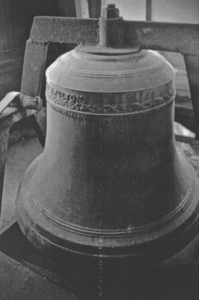
Since the picture of the bell clearly showed it was Cast by A. Fulton. I began to research A. Fulton of Pittsburgh. Andrew Fulton. The foundry did indeed cast church bells in the 1860s. Andrew Fulton, Jr. joined his father in making bells. Junior grew up to be the mayor of Pittsburgh. Now, that is an interesting connection. The foundry went through several name changes as partners joined or left. 

My Google searches were not turning up business records that may have been saved. However, the search did reveal that the American Bell Association was having its annual convention this year in…Pittsburgh. One of the educational tracks…Fulton Bells! I reached out to the general email address for the convention and asked if they could put me in touch with the person running the session. 

I soon heard back, and they confirmed that Fulton did indeed go through many name changes during its years in business. Since no date was cast into the bell, verifying when it was cast was hard. He did mention the bell “was probably made no later than 1865.” Hmmm, curious. When I told him the story of the fire in 1945 (see Pulling on Threads), he was surprised the bell had survived such a fire. The fall from the steeple would be enough to crack the bell. If the fall didn’t crack it, the intense heat would undoubtedly melt it. Hmmm, curious. He asked if I knew the diameter of the bell. I did not. He explained the approximate weight of the bell can be calculated from the diameter. 

I continued to pull on threads. 

My research uncovered a book that references Fulton Bells. Large Bells of America: History of Church Bells, Fire Bells, School Bells, Dinner Bells and Their Foundries by Neil Goeppinger. Of course, I ordered a copy! 

While I waited, somewhat impatiently, I might add, for the book to arrive. I emailed the First Church (PCA), formerly The First Reformed Church of Lansing. Perhaps they had information about the bell. That started a chain of emails with the church administrative assistant… well, two church administrative assistants both named Sheila. The Sheilas were gracious enough to send me copies of their church rolls from 1861, where some Ton ancestors appeared. They also put me in touch with a local historian who had written about the bell and climbed the belfry to see it. 

The book arrived…finally. Of course, I first examined the index and turned to the pages about the Fulton Bells. I was excited to read that they did indeed cast some undated bells with the inscription “Cast by A. Fulton” on the bell. This was confirmation I was on the right track! 

I wanted to reach out to the author, but the book had no contact information for him. Google was not much help either. Since the author was a former American Bell Association president, I reached out to my new friends at the Association. Could they put me in touch with Mr. Goeppinger? 

Within a few days, I had a voicemail message from him! 

I told him the story of the bell, its relationship with my great-great-grandfather, the confusion over the foundry, and the fire. “I’m surprised it survived. Most bells don’t.” He quickly dug through his records and found the information he had on Fulton. “The bell you have was probably cast in 1863 or before,” he said. I explained my GG Grandpa bought it in 1867 or 1868. He said it was possible, but I could tell he had doubts by the drawn-out way he said it. Hmmm, curious. I promised to be back in touch as I learn more. 

I reached back out to the Sheilas. “Would it be possible for me to see the bell? Could I climb up in the tower and see it with my own eyes? I would love to measure it.” The response was quick…of course! 

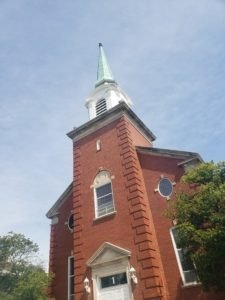
A couple of weeks later, my wife Carmen and I arrived at the church! After introducing ourselves, we were introduced to Mark, the church’s Administrator. He led the way down the hall, through the sanctuary, up the stairs to the balcony, and up a second set of stairs to the control room. The room overlooked the sanctuary and was filled with miscellaneous electronic gear. On one wall was a black metal ladder leading up to a small square hole in the ceiling. 

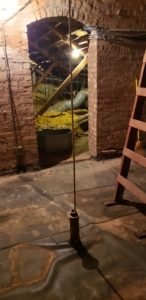
I followed Mark up the ladder and into the attic of the church. We were in a room approximately 20 feet square. One side of the room was open to the attic itself where a long row of rafters formed the roof of the building. The room we were standing in was empty except for a rope that came down from the ceiling and disappeared into the floor. “That’s the rope we use to ring the bell,” Mark explained, “it hangs into the control room.” Doh! In my excitement to climb the ladder in the control room, I had not even noticed. 

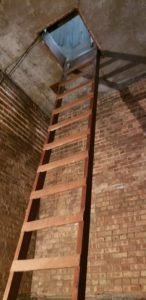
On one side of the room was a tall wooden ladder. The rails were 2x4s, perhaps 25 feet in length. The rungs were 1x4s. As Mark climbed, he stated, “This is a one-person-at-a-time ladder. Wait until I get to the top, and be careful. It wobbles quite a bit.” Mark soon disappeared into a hole in the ceiling. As I began to climb, I realized Mark was right…it did wobble quite a bit, more like shake and shimmy. I was hoping it would hold my weight! 

“Don’t look down! Don’t fall!” 

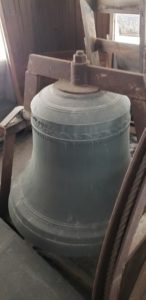
Minutes later, I went through the hole in the ceiling and entered the belfry. Here was THE BELL! I was touching the bell my great-great-grandfather purchased with money he helped to raise. The bell he transported from Chicago by ox cart. The bell that called him and my great-great-grandmother to worship.

Aside from the bell, there was barely room for Mark and me. I took several pictures, including one showing the bell was cast in Pittsburgh, not Troy, New York. Mark was kind enough to take a picture of me crouching beside the bell. Before I knew it, it was time to descend out of the belfry. 

“Don’t look down! Don’t fall!”

I waited in the attic for Mark to descend the ladder and then descended the next ladder back to the control room. Sure enough, the rope was hanging from a hole in the ceiling, knotted in several places to enable the ringer to keep a solid grip. Carmen and Sheila stood in the sanctuary, looking up at us. Carmen asked if I had wrung the bell. I wasn’t sure it would be allowed, but Sheila encouraged Mark to let me pull on the rope. “Amazing,” I thought as I rang the bell my great-great-grandfather purchased with money he helped to raise! The bell he transported from Chicago by ox cart! The bell that called him and my great-great-grandmother to worship!

But was it? 

A few days after our trip, I received an email from Mark. Later in the day of our visit, he talked with one of the church janitors, Dale, and told him the story of our visit. Dale said, no, that is not the original bell. The original bell was destroyed in the fire of 1945. In fact, he has the clapper from the original bell hanging in his garage. 

POP! My bubble of euphoria just burst! I was devastated. But I told Mark it was still very cool to climb the bell tower, see the bell, and ring a 150-year-old bell! I asked him to pass my phone number along to Dale. I would love to talk to him about the bell. 

A few days later, Dale called. 

His grandfather was a member of the First Reformed Church of Lansing. He served as the chairman of the Building and Grounds Committee during the time of the fire. He was one of the first on the scene and watched his dear church become engulfed in flames and burn to the ground. 

As the steeple burned, the bell slammed to the ground, making an incredible sound. The steeple toppled into the street. 

A few days later, Dale’s grandfather was sifting through the rubble. The bell had broken into three pieces. He found the clapper bent, partially melted, and buried in ash. He took it home and hung it in his barn. When his grandfather passed away, his father and uncle were sorting through his belongings. His uncle told his father to take the clapper because he still attended the church. Later, Dale’s father gave him the clapper, and he hung it in his garage. 

If his grandfather ever told him where the bell that hangs in the church today came from, he does not remember. Probably some other church in the area.

Photo: The Lansing Journal

So, there you have it…the rest of the story! It has been an interesting journey. I learned a lot about bells and their history, made some new friends, and uncovered a bit of history…just not the story I wanted to uncover!

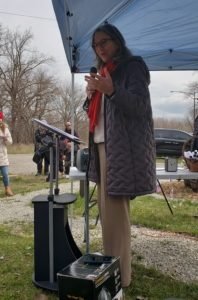
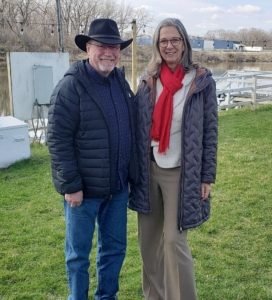
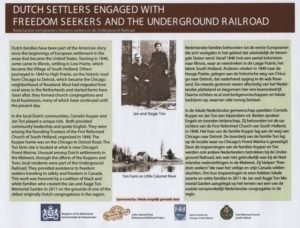
March 21st – traditionally recognized as the first day of spring. This year, I once again found myself on Chicago’s south side, visiting the location of my ancestor’s farm, now Chicago’s Finest Marina. Fitting for the start of a season that symbolizes rebirth. I was there to celebrate the gift of additional signage from the Kingdom of the Netherlands. Birgitta Tazelaar, Ambassador of the Kingdom of the Netherlands to the United States of America, delivered the keynote address. I was honored to represent Jan and Aagje and the Ton descendants and welcome the Ambassador. 

“Mevrouw Ambassadeur, namens Jan en Aagje Ton, welkom!” 

The new signage tells the story of Jan and Aagje Ton and other Dutch settlers in the area in the second half of the 19th century and their participation in the Underground Railroad. The left panel was written in English, and the right panel was in Dutch. Jan and Aagje would be honored. Though they left their homeland and loved their new country, they never forgot their roots. To be remembered by the land of their birth 125 years after their passing, in the language they loved…the language of their worship…would have been inconceivable to them. 

After unveiling the new sign, Ambassador Tazelaar shared these words:

“It’s a real privilege to be here at what my ancestors indeed called the “lage prairie”* or the “hoge prairie,”* to learn about the freedom seekers, the underground railroad, and their journey on the road from Chicago to Detroit and onto Canada to freedom. And listening to the stories of Dutch families that defied the Fugitive Slave Act to help them on their way makes it more special. 

I’m honored to have unveiled this interpretive panel together with Mister Harrington that tells the stories of Dutch settlers and their work on the Underground Railroad, and I look forward to seeing it permanently installed. 

After this event, I will be heading to DuSable Black History Museum for the opening of an exhibition called Slavery –  Ten True Stories of Dutch Colonial Slavery. And this is done in part with the Rijks Museum of Amsterdam. The exhibition is part of the Netherlands’ commitment to acknowledging our past. 

In December 22, Prime Minister Rutte, our current prime minister, formally apologized for the nation’s ugly, painful, and downright shameful role in slavery. Also, King William Alexander reiterated that apology a few months later and recognized that the legacy of slavery remains with us today. The King also announced that he had commissioned an independent study to shed more light on the role that the royal house played in our colonial past and [the] history of slavery. 

Being here at Chicago’s Finest Marina, once the farm of Dutch settlers Jan and Aagje Ton, is an encouraging reminder that even amidst that painful history, there are examples of inspiring moral conviction, the resilience of human spirit, and the humanity shared by the people of our two nations. I’m talking about the courageous freedom seekers who escaped the bonds of slavery, heading north and encountering Dutch immigrant families living on the Little Calumet River.

The Tons and the Kuypers recognized the freedom seekers first and foremost as people who needed help. They knew that providing a place to stay or ride across the river, the bridge, was the right thing to do despite the risk. They were breaking the law, as Professor Schoon also mentioned. But they held the higher moral high ground to do so. And I’m proud of the Tons and the Kuypers. I’m proud that their actions paved the way for The Netherlands to be involved in the Little Calumet River Underground Railroad Project today. 

It’s incredible to see a diverse group of individuals and organizations, churches, schools, and community groups that came together to rediscover this inspiring story and share it with the world. In particular, I would like to thank the Gaines family for hosting…for hosting us and stewarding this land, as well as Larry McClellan, Tom Shepherd, and Rodney Harrington, and everyone else that is involved in the Little Calumet River Underground Railroad Project.

Standing here, it’s clear that the story of the freedom seekers, the Dutch settlers on the Little Calumet, and the Underground Railroad has many forms. First and foremost, it’s a big story, a story of bravery and danger, a drama that touches many of the overarching themes of American history, themes like slavery, immigration, and civil disobedience.

At the same time, it’s a small story, a deeply normal story, a story of regular people helping other people purely because it was the right thing to do. 

And finally, it’s a story about our shared values, values that bind The Netherlands and the United States today, our cultural heritage, our commitment to human rights, and above all, our deep dedication to freedom. 

Thank you very much.”

*Low Prairie and High Prairie

Later, as I walked about the grounds and contemplated her words, much of what she said stood out. 

“ the nation’s ugly, painful, and downright shameful role in slavery” 


“ examples of inspiring moral conviction, the resilience of human spirit, and the humanity shared by the people”


courageous freedom seekers”


“incredible to see a diverse group of individuals and organizations, churches, schools, and community groups that came together to rediscover this inspiring story”


“overarching themes of American history, themes like slavery, immigration, and civil disobedience.

Because I had been reading about the history of the Doctrine of Discovery and its continuing impact on our beloved country and its people, words kept popping into my head. Words like reconstruction…restitution…reparations. It seems we need reconciliation before any of that can occur. Reconciliation of our past and our love of our country. Reconciliation with each other as people. 

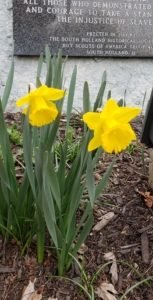
It struck me. I have felt all of what the Ambassador said. I AM proud to be an American, yet, there are parts of our history that are indeed shameful. I am honored that Jan and Aagje are remembered for their abolitionist activities, yet embarrassed that we remember them instead of the brave freedom seekers and their descendants. That is what these grounds mean to me. That is what the Jan and Aagje Ton Memorial Garden means to me. They are symbols of reconciliation. Reconciliation of my own feelings with our past. Reconciliation of the communities of Roseland, Riverdale, and South Holland. Reconciliation of the people who come together to remember the past and commit to moving forward…together. 

I think of Nadine Harris Clark, her sister, and others who volunteer countless hours to keep up the Memorial Garden and the grounds around the historical site at the Marina.  If someone you barely know or see perhaps once a year can be described as a friend, I would describe Nadine as even more than that…she is family. During this visit, I had the chance to meet her husband, William. We had a great conversation about the event, the place, and the history. We quickly became friends and, dare I say, family as well. 

I think of Ron Gaines and his family, the owners of Chicago’s Finest Marina, which stands on what once was Jan and Aagje’s farm. Before that, it was home to the Ojibwe, Odawa, Potawatomi, Miami, Ho-Chunk, Menominee, Sac, and Fox Nations. Ron is a retired Chicago police officer, and his two sons and daughter still serve. (Hence, Chicago’s Finest Marina!) 

I think of Tom Shepherd, Larry McClellan, and countless others who have toiled to bring this story to the surface and help us all remember it. Their work has brought communities together and created a spark of reconciliation.

That is what remembering Jan and Aagje means to me. 

************************************************************

For those of you who may be new to my journey of the last several years or those who want to refresh their memories. Here is a brief recap and links to the journey’s posts. 

Almost four years ago, I told you about my journey. A journey of discovery. You may recall I learned of my great-great-grandparents’ involvement in the Underground Railroad. Their farm on Chicago’s southside served as a stop for freedom seekers on their way to Indiana, then Michigan, and ultimately, Canada. I learned of this on Juneteenth, 2020


In 2020, Carmen and I watched a webinar led by Dr. Larry McClellan, a historian who has dedicated this part of his career to uncovering the forgotten history of the freedom seekers’ journeys across Illinois and Indiana. What followed was the devouring of dozens of books, multiple trips to Chicago, and untold emails and texts as I learned more of the story


One of my most treasured moments of this journey occurred in 2021. On our way to scatter my father’s ashes in Wisconsin, we stopped at the Jan and Aagje Ton Memorial Garden we had learned about in the webinar. It was there we met Nadine Harris Clark, the aunt of LeRone Branch. “We” being me, my wife Carmen, and my son Brad.


During our visit in 2021, we learned that the Memorial would be re-dedicated that fall to commemorate the Tenth Anniversary of its installation…on the same day as my 45th high school reunion…in Evansville, Indiana, three hours further south from the Memorial from where I live in Indianapolis. I was torn. You can read about the serendipitous events that enabled us to attend the rededication AND meet LeRone Branch, the Eagle Scout who built the Memorial in 2011 here


My journey continued in 2022. Signage was to be dedicated on the site of their homestead, now the Chicago’s Finest Marina. I made the trip to help represent the Ton Family at the ceremony. The Netherlands Consul General Bart Twaalfhoven from the Chicago Embassy was there to commemorate the occasion. It was an honor to meet him. It was an honor to be standing on Hallowed Ground


Our next stop on the journey was in 2023. Carmen, my son Brad, and my grandson Jordan took a trip to Chicago – three generations of Tons. My primary reason for the trip was participating in one of Larry McClellan’s tours about the Underground Railroad. To surprise my grandson, we included a stop at the United Center to visit the Michael Jordan statue. Oh…did I mention my grandson’s name is Jordan…named after the legendary Chicago Bull? Alas, I did not write about the journey. However, the highlight for me was getting back on the bus after one of the stops and Jordan showing me an internet post he had found on his phone showing Jan and Aagje’s farmhouse…he WAS paying attention. 


On the most recent trip, I included an extra stop to visit a historic bell on the grounds of the Thorn Creek Reformed Church in South Holland. That stop revealed an entirely new thread to pull on! 


I couldn’t tell you my earliest memory of hearing church bells. I can only tell you, as the son of a preacher, my guess is I’ve heard church bells most of my life. Growing up in a small town in the Midwest, I remember hearing the bells tolling every hour on the hour…and at noon, they would play a short song, er uh, hymn. There is something about playing outside on a warm summer day with bright blue skies and hearing the bells reverberate through town. It’s kind of like baseball and apple pie.  

I do remember our annual visits to the Green Lake Conference Center (or just Green Lake as we called it) and the carillon chiming high atop Judson Tower. The peals could be heard across the grounds and from the lake. Trekking the 121 steps to the top of Judson Tower rewarded you with an experience you could feel from the top of your head to the tips of your toes! 

When I was in high school, I joined the handbell choir at church. We made some beautiful music if I do say so myself! Our choir became fairly well known in town and we were able to play some high-profile concerts. We made some incredible music…even this old rock and roller has to admit that!

Today, our house reverberates with chimes (bells) from a cuckoo clock, outdoor windchimes, and my grandmother clock (my mother’s clock and she insisted it was NOT a grandfather clock, it was a grandMOTHER clock!

All of this is to tell you why I had to make an extra stop on my most recent trip to Chicago. I had to see the bell. What bell, you ask? Well, let me tell you the story…


Great-Great-Grandfather and The Bell

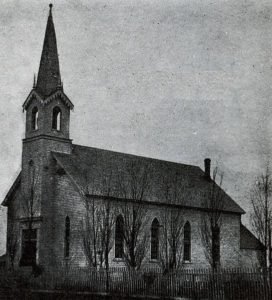
In 1849, a group of families immigrated from The Netherlands to the south side of Chicago and settled in what is now called Roseland. They called the area High Prairie. These Dutch were devoted members of the Dutch Reformed Church. Soon after their arrival, they founded the First Reformed Church of Roseland. 

By 1867, the church had outgrown the house they had been using for services and decided to build their first church building. The frame church at 107th and Michigan Avenue included a wonderful steeple and belfry. Wonderful…but empty.

First Reformed Church of Roseland

According to my great-great-aunt Neeltje (Ton) Jansen, daughter of Jan and Aagje Ton (my paternal great-great-grandparents), this bothered her father to no end. As one of the church’s founders, he took it upon himself to raise money for the bell.  He donated the first $100 and, in a short time, had the $300 they would need to buy a bell (that’s about $6,500 in today’s dollars). As he collected the money, he gave the money to Aagje, who hid it in an old beaded bag and put it in a drawer for safekeeping. 

One night, long after dark, two men knocked on the door asking for directions. When Jan stepped out to point the way, they hit him in the forehead with a slingshot. The two attackers held him down and demanded the money. Bleeding profusely from the wound, he led them to a closet and gave them the money from his trousers. The men knew he had been raising money for the bell and knew there had to be more. They beat him, threw him in the closet, and locked the door. They then proceed to ransack the house. Pour Aagje was confined to her bed, just having given birth two or three days prior, she hid the other children with her and waited. Finally, the men gave up and left. Though they rummaged through the drawer containing the money, they failed to realize the beaded bag contained what they sought. 

The very next day, Jan sent the money to Troy, New York, to pay for the newly founded bell. 

Our story does not end there.

The Bell Arrives

About a month later, Jan received notice that the bell had arrived in Chicago, he tied his team of oxen to the wagon and rode the 20 miles to the small town along the lake. Possibly to the same port he and his family had arrived at 18 years before. 

Three days later, Aagje had not heard from Jan. Distraught, she asked two neighbors to search for him. They found his wagon bogged down in the mud and the bell lying half-buried in the muck near The Eleven Mile House Tavern (92nd and State Street). When they found Jan, he recounted the ordeal of getting stuck in the mud with the heavy bell. His efforts to free the wagon tipped the bell into the mire. Since he was alone, he could not lift the bell back onto the wagon, so he just decided to wait, thinking, “Someone will come looking sooner or later.”

The men rescued the bell and a week later, it was hung in the belfry and called its first worshippers to services. 

Visit to The Bell

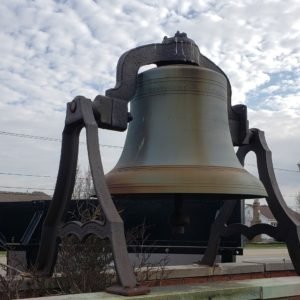
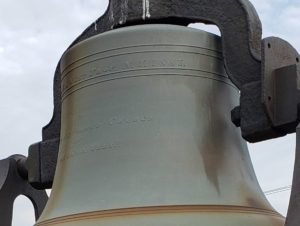
That was my extra stop…to see the bell. Although a distant cousin had sent me pictures of the bell, I had to see it myself! The bell rang in the belfry the First Reformed Church of Roseland at 107th and Michigan Road until the church built a much larger facility in 1887 just south of the intersections at 107th Street. The bell was later moved to the First Reformed Church of Lansing (Illinois). Today it is on display at Thorn Creek Reformed Church in South Holland, IL…or is it? 

The Bell?

It is now a few weeks after my visit. I knew I wanted to tell the story of the bell. As I wrote, I kept referring back to the pictures I had taken that day, the book about Roseland Down an Indian Trail in 1849 by Marie K. Rowlands, and the story my great-great-aunt had written in 1932. Something was off, but I wasn’t sure what. Then I saw it. The bell at Thorn Creek certainly was forged in Troy, New York as Ms. Rowlands wrote in her book…but the date…the date forged in the bell was 1887…- 1887, not 1867.

The Date?

So, I began pulling on threads. Those threads led me to research five churches, two foundries, and the history of the Dutch Reformed Church and its various successions and splits. 

The First Reformed Church of Roseland did, in fact, build a new larger building in 1887. It seems they must have ordered a new bell for the new facility. The original bell, no longer needed, made its way to the First Reformed Church of Lansing (Illinois). A brother-in-law of Jan’s helped to found the Lansing church. Perhaps that is why the bell was gifted to them?

The Fire

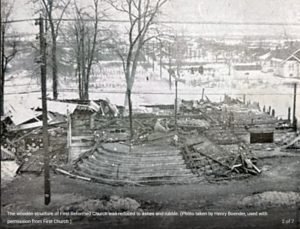
The Lansing church built its first building in 1897. That building burned to the ground in a huge fire in 1945. Newspaper articles from the time describe the steeple (and the belfry) crashing down into the street. An eyewitness, who was ten at the time of the fire, remembers the sound the bell made as it slammed into the roadway. 

THE Bell
Photo: Daniel Bovino

The congregation raised money and built a new building on the same spot. Two area historians believe the bell hanging in the belfry of the new building (completed in 1947) is the “Ton Bell.” If it is, it creates another question. Cast into the bell is the name of the bell founder, “A. Fulton.” I cannot find any reference to a bellmaker in Troy, New York, by that name. I can, however, find a renowned bellmaker who had a foundry in Pittsburgh, PA, in the 1800’s. Could the author of the “Indian Trail” book have made a mistake when she wrote, “Ton dispatched the money to Troy, New York with an order for the bell”? That now seems likely.

As for the 1887 bell that is on display in front of the Thorn Creek Reformed Church, how did that bell find its way there? It is clearly cast for the First Reformed Church of Roseland. The answer is less of a mystery than I thought. You see, the Thorn Creek church IS the Roseland church. The church moved to South Holland in the early 1970s. I assume, since there already was a First Reformed Church of South Holland, they named themselves Thorn Creek. 

Sometimes when you pull on threads, you confirm the past, sometimes, you reach a dead-end, other times, you gain new insights that rewrite the story. I will keep pulling on threads…


The First Reformed Church of Roseland, IL

  • established 1849,
  • Original building built 1867
  • “Ton” Bell Purchased circa 1868
  • New building built 1887
  • Second bell (now at Thorn Creek) cast 1887 
  • moved to South Holland, IL circa 1971

The First Reformed Church of Lansing, IL, established 1861, today called Lansing First Church PCA

  • original building built 1897
  • “Ton” bell hung in belfry
  • Building destroyed by fire 1945
  • New building built 1947
  • “Ton” bell hung in new belfry

The First Reformed Church of South Holland, IL

  • established 1865
  • Reorganized 1886
  • Site of the Jan and Aagje Ton Memorial Garden 2013

Thorn Creek Reformed Church, South Holland, IL

  • First Reformed Church of Roseland relocated to South Holland circa 1971
  • Home of the “second” bell from 1887

Lilydale Progressive M.B. Church, Roseland, IL

  • Bought the building built in 1887 from the First Reformed Church of Roseland when they moved to South Holland and became Thorn Creek circa 1971


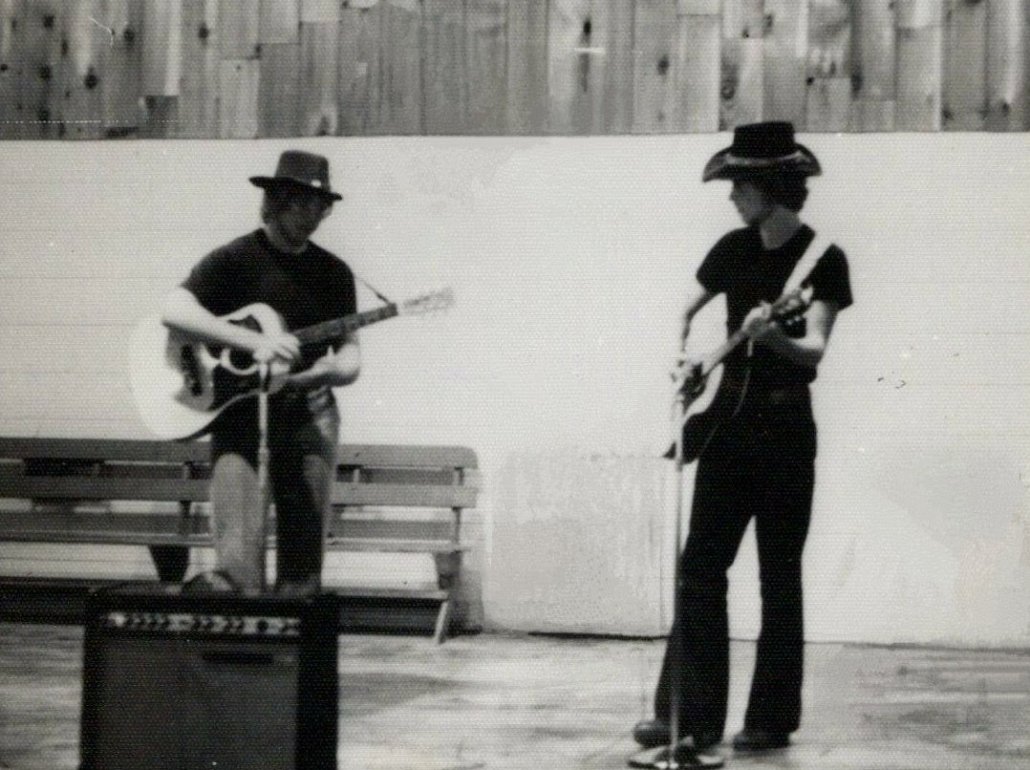
Watching the River - Terry Webster & Jeff Ton playing guitars - 17-year-old self

A few weeks ago, my wife Carmen and I went to see Jim Messina, you know, half of the Loggins & Messina duo from the early 70s. He and his band were playing at a small intimate theater. Our seats were in the second row. I was pumped! Messina of Poco, Buffalo Springfield, and yes, Loggins & Messina was country rock bordering on country. There was a time in my high school days when Loggins & Messina was about all I listened to. I had all their albums (that would be vinyl boys and girls). You could call this my “acoustic phase,” with Loggins & Messina, James Taylor, Bread, and more.

Jim opened with, “Thinking of You”

Something inside of me
is taking it hard each day
Something inside of me
is making me feel this way
Whenever you’re near me, you’ve got me thinking of you*

As we sang along, something started to happen. The cares of 2023 seemed to float away. With barely a pause, he flowed right into “Watching the River Run”

And it goes on and on, watching the river run
Further and further from things that we’ve done
Leaving them one by one
And we have just begun, watching the river run
Listening and learning and yearning to run, river, run**

Run, river, run…the song…1973…years before I fell in love with being on a river in a canoe…years before Carmen and I met and began to canoe together…years before my executive coach, Dan Miller, taught me the river metaphor…

The opening chords of the next song, “House at Pooh Corner,” interrupted the stunned connection I had made…rivers…rivers of life

So help me if you can, I’ve got to get
Back to the house at Pooh Corner by one
You’d be surprised, there’s so much to be done
Count all the bees in the hive
Chase all the clouds from the sky
Back to the days of Christopher Robin and Pooh***

Suddenly, I was no longer in the theater. I was in a place quite familiar yet, long forgotten. In front of me on stage were two teenagers playing guitars…acoustic guitars. The song they were playing was beautiful. The guitars weave the melody together almost as one. “Loggins & Messina Suite #9″…of course! I wrote that song, rather, Terry Webster and I wrote that song in the summer of ‘75. We were 17. We were both into Loggins & Messina, so, of course, when we wrote an instrumental using our acoustic guitars, we had to name it in there honor!

Wait! How did those two kids know that song…I looked closer…the one on the left looked a lot like Terry…maybe his kid? Who am I kidding, could be his grandson. But, the kid on the right…the kid on the right…that was ME! As the final notes faded into the air, he looked right at me. My palms began to sweat. My heart was racing. I gulped as he walked toward me. Holy shit! What would I say? What would I tell my 17-year-old self?

He put down his guitar. He put down MY guitar. He nodded, and I picked it up. Soon, I was playing the bridge to “Loggins & Messina Suite #9”. Then it came to me. This is the little tune I play for my grandson Jordan! How could I have forgotten? I turned to me…well, the 17-year-old who would be me.

“You would love Jordan. He’s such a great kid! Actually, you’d love all your grandkids!”

“Grandkids, what are you talking about out, old man, I’m 17.”

“Jeff, I’m you. We have six grandkids, with another on the way.”

“What? You can’t be me. Grandkids?!!? At least I know what happened to your hair,” he laughed.

“Man, we have a lot to talk about! Let’s go for a walk.”

Son put down that guitar

If I really had the chance to talk to my 17-year-old self, I would have a lot to say.

When I was 17, the only thing I could think about was being a rock star. It consumed almost every waking moment, it had since I was 10 or 11. There I was, a junior in high school, and I had no plan other than playing guitar and writing music. I had no idea where to go to college (not going was not a choice). I opted to go to Indiana State to major in music theory and composition because I had three other friends going there, including Terry.

What I would SCREAM at my younger version is to put down the guitar…you have no talent (I didn’t), you have no drive (I rarely did anything other than jam), and the lyrics you are writing are simplistic. I doubt I would have listened. I certainly didn’t listen to those around me at the time…but, hey, maybe I would listen to my old man-self.

I would tell him to pick up a keyboard. In 1975 computers filled rooms. We had a couple of weeks of Fortran programming in Miss Hobson’s math class. We had to write the programs out longhand, then take turns at the one keypunch machine. Our punch cards were then sent downtown, and maybe, just maybe, they would run.

Sometime during my Junior or Senior year, our school was fortunate enough to be on the rotation for a mid-range computer that was sent to various schools in the area. It was for the “computer club.” I think I got to see it one time because I was not in the club. Only nerds were in the computer club, and I. was. not. a. nerd! (Well, I was, I just didn’t know it yet.). The only thing I ever remember them doing on the computer was running horse race simulations. At any rate, I didn’t touch it.

If I had the chance, I would tell the much-younger-version of me that one day, in the not-so-distant future, he would fall hopelessly and madly in love…with writing software. He would study day and night. He would read countless textbooks. He would learn from those around him. And he would become a rock star…in software development. If only I had the chance to tell him…

Don’t be in such a hurry

At 17, I was in a hurry. In a hurry to finish high school. In a hurry to grow up. I wanted that big break that would allow me to become a star. What the 17-year-old-me could not have known was what I would miss.

I opted to take part in the work-study program during my senior year. You see, despite not really studying, I was a good student. I could have graduated early, but my parents would not allow it. What they did agree to was the work-study program. While other kids were having an incredible senior year, I got out of school at 11 o’clock and went to my job. You see, I wanted things. I wanted a car of my own. I wanted to visit my girlfriend, who lived several hours away. I wanted to impress her, she was two years older than I was and already in college.

So while others were doing all the things seniors did, I went to work. I rarely hung out with my peers. I became a bit of a loner because, well, my girlfriend didn’t live in Evansville. Today, when I look back, I only remember a handful of kids from high school. I lost touch with them in my haste to grow up.

My 17-year-old self would laugh at the thought of getting married at the end of my first semester of college, yet, that is what I did. Married, at 18. I was in love. We were going to make it work. I dropped out of school after one semester and got a job at a sporting goods store, and dreamed of opening a record store (hey, if I couldn’t make records, I would sell them). I would move my wife to Elgin, Illinois, so that I could attend a small liberal arts college and major in creative writing. I would drop out of school again, promising to return when my wife graduated.

And, in 1978, at the age of 20, we would have a son. A beautiful baby boy. A boy, with a boy.

Growing up too fast. I got a full-time job at a bank, working collections on bad credit card debt. I still wrote music, but the life of a rock star seemed so very far away. The marriage would last twenty-three years and give me two incredible sons before it ended in a very painful divorce.

I would tell that version of me to slow down. To enjoy being 17, 18, 19. To stay in school. To study computer science. If it were right, she would still be there. I probably wouldn’t have listened, lord knows my parents had tried to tell me.

Stop following and start to lead

Following was easy. Heck, I chose what college to attend because three kids next to me in the circle, when asked where they were going to college and what their major would be, answered Indiana State and music. It was the first time I ever declared it. I answered because it was the easy choice…to follow.

Growing up, my mom used to joke that, unlike the old cigarette ad, I would rather switch than fight. What she saw as a peacemaker, I saw as following. It was easier.

Even after growing up and becoming a computer programmer (a “dev” as we call them today), I would rather code. I was gifted. I could listen to someone describe a problem they were having, and I could solve the problem with code. The computer keyboard became my instrument, and I could make it ROCK! Be a manager, no! Be a leader, hell NO!

There is a debate about leaders…are they born or made. As I look back, I was always a leader. The other kids always followed me (good or bad). When I was 10 or 11, a minister asked a group of kids to name a great leader; one of the younger kids piped up and said, “Jeff Ton,” much to the laughter of the congregation. In high school, despite becoming a loner in my Junior and Senior years, prior to that, I led at church, in my neighborhood, in Scouts, and at school. Rarely in a position of leadership but naturally leading those around me.

Still, it was easy to follow. Leading was hard. Following meant I could blame the leader. Leading meant “playing politics.” 17-year-old Jeff would be stunned to see 65-year-old Jeff. After getting dragged, kicking, and screaming into leadership, I became quite good at it. I led teams across the globe. I led departments. I led companies. I have led a community of my peers for over a decade. I now teach leadership to executives and emerging leaders alike.

Step up! Find your voice! For god’s sake, lead!

The River

The river runs. Always changing.

If I had the chance, I would say all these things and more to the younger me.

“Talk to your parents and grandparents. You will have questions for them when they are gone.”

“Don’t do it!” (boy, THAT covers a LOT of ground)

“Oh, and go back to history class and study Lewis & Clark. You won’t believe how THAT turns out!”

But, honestly, I hope me wouldn’t listen. I hope me would travel the river exactly the way we traveled it. I would not want to miss all the joy and laughter. I would not want to miss all the pain and tears. I would not want to change anything because, looking back on 65 years, that river made me who I am today. It gave me a wonderful wife and partner, two incredible sons, six (soon to be seven) grandkids, several dear, dear friends, and a community of hundreds of peers.

And it goes on and on, watching the river run
Further and further from things that we’ve done
Leaving them one by one
And we have just begun, watching the river run
Listening and learning and yearning to run, river, run**


*Songwriters: Jim Messina - Thinking of You lyrics © Concord Music Publishing LLC
** Songwriters: Jim Messina / Kenny Loggins - 
Watching the River Run lyrics © Concord Music Publishing LLC, 
Gnossos Music / Milk Money Music, Universal Music Publishing Group
*** Songwriters: Kenneth Clark Loggins - 
House at Pooh Corner lyrics © American Broadcasting Music, Inc.
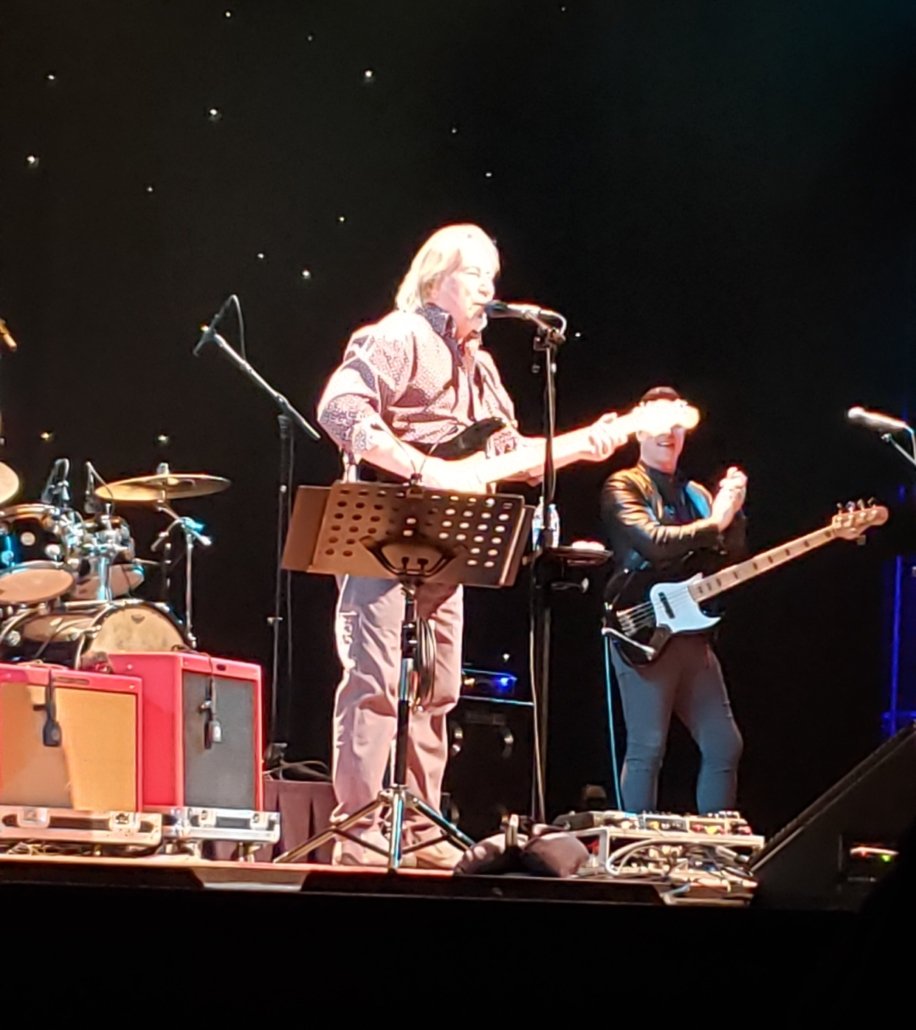
Jim Messina


Creating TimeTime. Time has been on my mind recently. If we, as humans, have one thing in common, it is time. Time is precious. Time is limited. Our time is unknown. With all our ingenuity, we have yet to be able to create time. But what if I told you, you could create time? The answer has been with us for two thousand years.


I recently had the opportunity to interview Steve Johns on the podcast I host. Our conversation centered around his soon-to-be-published book, Fearless – Leadership Lessons at the Crossroads. In the book, Steve quotes Marcus Aurelius. Aurelius Antoninus was the Roman emperor from 161 to 180 AD. He was also a Stoic philosopher.

If you seek tranquillity, do less.
Or (more accurately) do what’s essential—what the logos of a social being requires,
and in the requisite way.
Which brings a double satisfaction: to do less, better.

Because most of what we say and do is not essential.
If you can eliminate it, you’ll have more time, and more tranquillity.*

The Secret to Creating Time

“You will have more time.” The words haunted me. The secret to creating more time is to do less…better. Being in business for the last 40 years, productivity experts have been saying the same thing. Heck, I even preached to my teams to “slow down to do more.” For some reason, reading the words of an ancient brought it to front and center in my mind, heart, and soul.

Later, as I listened to the podcast recording, I realized I had the answer…the answer to the question, “why did you move from Whitetail Meadow?” It is a question we have been asked a hundred times in the last three months. “You loved your property; I thought you would never leave. Why did you move?”

I had been struggling with my “why” for almost a year. Why did I want to move? What made us think it was time to move?

Why did we move?

When we first moved to Whitetail Meadow, I took to each task and project with energy and passion. I could easily spend eight or nine hours on Saturday and Sunday freeing a logjam in the creek, removing invasive shrubs, cutting trails through the property, and helping Carmen in the garden. Did I get tired? Of course! Did I get sore? Certainly! As the years passed, the eight or nine hours turned four or five, then three or four. The soreness would last for days instead of overnight. But was that my why?

Was it the walnuts?

Was it the 10’s of thousands of black walnuts we picked up each year between August and October? Picking those up out of the yard so that one could walk through the yard without breaking an ankle certainly was a pain in the ass…actually, a pain in the back, arms, wrists…we would both cuss and moan each year, all the while, praying for a “light season.” We certainly had the resources to do something about it. Harvesting 28 sixty-foot black walnut trees was something we couldn’t bring ourselves to do.

Was it the ignorate litterers?

Was it the constant need to walk the property to pick up the trash that idiots threw out of their cars? Can you believe in this day and age, people still litter? My goal for twelve years was to see someone throw their trash into my yard and follow them home to “return” the trash. Beer cans, whiskey bottles, cigarette cartons, and bags and bags of fast food containers were tossed with no thought to the people who lived there (us), the people that had to pick it up (again, us), or the people who were breaking their backs to create a beautiful sanctuary (yes, us). Ok, I may be just a little bitter about this one!

Was it the bad drivers?

Was it the steady parade of bad drivers who could not keep their cars on the road and out of our yard for one reason or another? Driver after driver would fail to navigate the steep hill coming down 75th Street. They would either end up taking out the guardrail and destroying the wildflower meadow behind it, or they would miss the guardrail and end up in the front yard of our rental home, taking out trees and creating deep ruts in the lawn, or they would make it past the rental and still not have control of their car and do a similar “lawn-job” in our yard. The dump truck driver who missed the guardrail but turned over on the steep incline and spilled 10 tons of gravel into the meadow, not to mention the diesel fuel, really created a mess!

They were just weeds, anyway!

My “favorite” was the Lawrence North High School student who lost control on the ice and ended up in the meadow. When his grandfather showed up to help, he got his car stuck because he pulled over on top of the culvert that runs under the road…and then blamed us. The kid then asked the cop if he could “drive his car out instead of calling a tow truck because it was just a bunch of weeds anyway.”

Creating time

No! Our “why” was none of those things. Like many life lessons, the answer is something we already knew. We just need a teacher to remind us. Time is precious. We are creating time by focusing on what is important and essential…our family, our friends, each other, and ourselves. THAT is why we left our beautiful Whitetail Meadow…to create time!

I will leave you another quote from our friend Marcus Aurelius:

Keep in mind how fast things pass by and are gone—
those that are now, and those to come.
Existence flows past us like a river:
the “what” is in constant flux, the “why” has a thousand variations.
Nothing is stable, not even what’s right here.
The infinity of past and future gapes before us—
a chasm whose depths we cannot see.*

*Aurelius, Marcus. Meditations (Modern Library)
Random House Publishing Group. Kindle Edition.

Whitetail Meadow

With apologies to Sir Elton John and his masterpiece Goodbye Yellow Brick Road, we are saying “goodbye Whitetail Meadow.” Unlike the singer, we are not leaving the penthouses and city life to return to the farm; we are leaving the “farm” for a simpler, less strenuous, less time-consuming life in a subdivision! 

Whitetail Meadow was the name we gave to our little slice of heaven on the northeast side of Indianapolis. This hidden gem along Sargent Road is a bucolic piece of countryside in the city. Originally four acres, we expanded to ten by purchasing the house and property next door. Mud Creek flows through the yard and the partially wooded acres of wildflower meadows. Heaven. 

Cookouts, campouts, and celebrations made many memories in the 12 years we called Whitetail Meadow home. As we were preparing our home for sale, Carmen and I wanted to leave a letter for anyone touring the house to read. Before I share some more personal memories, here is an excerpt from that letter: 

  • On our first day at Whitetail Meadow, we watched a mother pileated woodpecker teach her young son how to peck for insects. That was our introduction to the lessons in nature we would learn!
  • Sitting on the deck enjoying a beverage while the deer graze in the yard. Watching the seasons pass through the does, growing heavy with their soon-to-be newborn fawns. The spotted fawns, barely able to walk, grow into adolescents. The males grow their antlers covered with velvet fuzz, sparring with each other, later shed the fuzz, and finally, the antlers themselves. 
  • Watching the abundant wildlife, including more bird species than we can count, woodpeckers, eagles, hawks, and more. Mink playing in the creek and fox on the hunt. Mallards and wood ducks paddle the creek while the blue herons fish for dinner. At night, the owls’ hoots can be heard. 
  • We have celebrated countless holidays, birthdays, and gatherings of family and friends. In 2022 we even hosted a wedding in the backyard, complete with a 40-foot tent and dinner for 50! 
  • The fall is the perfect time for mini-hayrides through the meadow, followed by picking pumpkins from grandma’s garden and decorating them with stickers, markers, and carvings for Halloween. 
  • Summertime brings outdoor movie nights, campfires (mmmm, s’mores), and backyard campouts. It is also the perfect time for creek stomping – wading, swimming, throwing and skipping rocks, exploring, and finding treasures. When not stomping in the creek, fishing is another way to enjoy being outdoors!
  • Winter brings a quiet stillness to the valley as the snow carpets the meadow and ice forms in the creek. Tracks in the snow reveal the presence of wildlife hunting for a snack. The hill at the north end is just big enough for grandpa-powered sledding for the grandkids.
  • In the spring, Whitetail Meadow emerges from its slumber, and the cycle begins again! Flowers bloom, the foliage leaves out, and the migrating animals return. 
  • Hiking the trails every season reveals something new as the meadow and the forest grow and change. Every day, every moment is different if you take the time to look and listen.Whitetail Meadow

Hallowed Ground

In my previous post, I spoke of hallowed ground, not hallowed by consecration, but hallowed by the moments of life that happen. The memories of life. Memories with our sons Jeremy and Brad.

Jeremy and Brad

Jeremy, so much life lived in the years Carmen and I spent at Whitetail Meadow. Happy days, painful days. For a year or so, he was our neighbor at Whitetail Meadow, living in the second house we bought on Sargent Road. I always love to see him come around the corner of the house, usually moments after Braxton appears. His knowledge of rocks, soil, and water gained from his career in materials testing came in handy on a variety of projects on the property. The most memorable project for me is the weeks we spent building the paver patio. My grill sat on that patio for years, and I would think of Jeremy and I toiling over leveling the ground, compacting the gravel and the sand, and laying the pavers, every time I grilled.

Brad, so much life lived in the years Carmen and I spent at Whitetail Meadow. Happy days, painful days. (Yes, I know I repeated myself 🙂 ). Memories of Brad playing catch, hitting a Wiffle ball, and smashing a drive with Jordan’s plastic golf clubs. Images of Brad following the kids around during Easter Egg hunts or enthusiastically enjoying the fall hayrides easily come to mind. Carmen and I felt blessed to be able to welcome Brad and his sons to live with us for a year during one of life’s more painful times. While these empty nesters were indeed accustomed to our routine, being able to sit down to an evening meal with them and talk about their days was something we will always remember. 

Hallowed ground…while at Whitetail Meadow, we welcomed the next generation of Ton, Braxton, Jordan, and Jasper:  

Braxton, Jordan, and Jasper

Braxton, our first grandchild…so many memories. We loved to play “Mario and Bowser” on the playset in the backyard. Somehow Mario (aka Grandpa) could never defeat Bowser! Braxton’s and Grandpa’s great adventure – the day I took off work to babysit him, and we explored the 10 acres together! The highlight has to be just this past summer. Braxton is autistic, and one of the ways this manifests in him is a strong reaction to getting his head wet; showers and baths were a challenge. This summer, after taking a few swimming lessons, Braxton, Grandma, and I spent THREE hours in the creek. Braxton dove for rocks and swam between our legs, and spent the whole time UNDER water! 

Jordan, Jordan grew up at Whitetail Meadow. Grandma provided his primary care for the first several years of his life. Later she provided after-school care for him. They were (and are) inseparable. Jordan loved to play dinosaurs in the meadow and the woods. He would be a velociraptor, or a T-rex, or whatever his favorite creature was at the moment. Grandpa would be his prey, captor, or fellow dinosaur. Jordan also loved to help Grandpa feed the deer with his little bucket of cracked corn. The scenes that will stand out for me are Jordan and Grandma raising Monarch butterflies, discovering the caterpillars, moving them to their habitat, watching them make their chrysalis, emerging as a butterfly, and finally coaxing them out of the habitat on to the garden flowers. 

Jasper, now two and a half, knows the Meadow as “side,” as in “boots…go side”…almost his first words. He loves playing outside, whether following big brother Jordan around, showing no fear climbing the playset, sliding down the big slide, or exploring the creek. Jasper loves to chase the birds and squirrels, never quite able to catch them. By far, his favorite activity is throwing “wa nets”, “tix”, and “rcks” in the “wada” (for those unable to speak two-year-old, that is throwing walnuts, sticks, and rocks in the water). He was always quite proud when one actually landed in the water, proclaiming, “I did it.” 

All three of them love the creek. Creek stomping! Throwing rocks, wading (and now swimming), exploring, and visiting the “waterfall.” 

Hallowed ground…all of these memories make Whitetail Meadow hallowed ground, but it was August of 2022 when our dear friends Dennis and LeeAnne declared it as such:

Katrina, Ariana, Henry and Avery

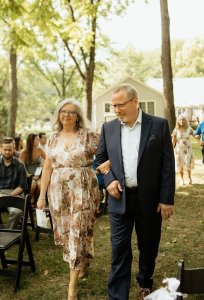
Katrina, Ariana, Henry, and Avery joined our family, quite literally, at Whitetail Meadow. Brad and Katrina were married in a beautiful ceremony in the backyard at Whitetail Meadow. The day was perfect. A wonderful blending of two families, attended by family and friends. Ariana and Avery were beautiful angels scattering flower petals down the aisle. Jordan, Henry, and Jasper were handsome ringbearers. And we will always remember Brad’s face when his gorgeous bride-to-be, Katrina, walked across the deck, down the stairs, and across the yard toward him…the moment they looked into each other’s eyes and expressed their vows…and, of course, the pronouncement of husband and wife! 

Hallowed ground…together:

Carmen

Carmen, my words fall short. The memories we built over the time we spent there…together…are beautiful and endless. Working side by side in the garden, entertaining friends, the countless family celebrations from Thanksgiving during our initial renovations (no drywall…only studs, rafters, and subfloor), to Easters, Mother’s Days, Father’s Days, birthdays…and Christmases, wonderful, magical Christmases! Of all that, what I will remember most, is just being with you. Sitting on the deck on a warm summer evening, watching the deer play reindeer games, the eagles fly overhead, or the groundhog peeking around the corner. Sitting by the fire on a cold winter night, talking about our day, making plans for the future, laughing together, crying together, loving every minute. 
I look forward to building more memories in this next chapter in our lives. So yes, we are saying “Goodbye Whitetail Meadow,” but the song is not over; there are more lyrics to write, more melodies to pen, and more harmonies to blend. 

Standing on Hallowed GroundHallowed Ground…I could not shake that thought from my mind. Hallowed Ground. We were standing on hallowed ground. The thought brought back memories of my childhood growing up in the church…the old gospel hymn “Standing on Holy Ground,”…the many scriptures that spoke of removing your sandals to stand on holy ground…that day, we indeed were standing on hallowed ground…sacred…revered…not because it had been consecrated and declared as such, but because of what happened there…between strangers from different lives and different worlds. 
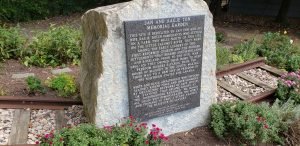
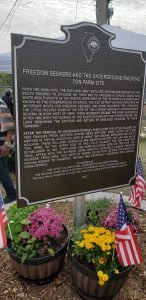
I found myself once again heading to the Southside of Chicago. This time to attend the dedication of an Illinois State Historical Marker at the site at once was my great-great grandparent’s farm. As I neared the city, I decided to visit the Jan and Aagje Ton Memorial Garden in South Holland. I pulled into the parking lot on the church’s grounds, realizing this would be my first time visiting the garden alone. Standing on Hallowed Ground

After walking through the garden and looking at each flower and plant, knowing they had been purposely planted by my new friend Nadine Harris-Clark, her sister, and other volunteers, I sat quietly on the bench. Hallowed ground. It was a beautiful early autumn day. Not a cloud in the sky. A gentle and somewhat chilly breeze rustled the leaves of the trees above me. As my eyes took in the memorial, a sound came to my ears from off in the distance…the sound of a train whistle…I strained to listen. I could almost hear the clap-clap-clap of the steel wheels passing along the tracks…hallowed ground. 

Soon the church bells tolling at noon broke me out of my trance. As the 12th toll echoed across the grounds, I headed to my car. It was time to drive the two miles to Chicago’s Finest Marina on the grounds of what was the Ton Farm over 100 years ago. 

The Dedication – Ton Farm

I found myself feeling somewhat anxious, somewhat curious, and somewhat nervous. When we had last visited the farm site, the gates had been locked, and we could not explore the area along the river. Today would be different. Today the gates would be open. 

After saying hello to Nadine, Tom, Larry, and Robin, I wandered off. I wanted to take it all in before the dedication ceremony. I wanted to walk the grounds alone. I wanted to stand along the river. I have always loved rivers. Something about watching the water change and dance in the light as it moves past me, never to be the same again. I wondered how many times Jan and Aagje stood here and watched the river. How often did my great-grandpa George fish in the river or play in its waters with his siblings? I could hear the peals of laughter and delight as George splashed one of his sisters in the cool waters. 

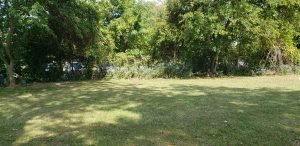
As I walked through the grass to where the house would have been located, the emotions came alive. It was here freedom seekers would come, seeking safety, protection, food, warmth, and transportation for the next leg of their long journey. It was here Jan and Aagje would risk fines, jail time, or worse. 
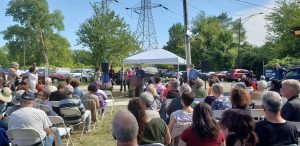
I could feel it. Hallowed Ground. Sacred ground. Revered ground. 

Fear

Fear was the first thing I felt. The freedom seekers had been traveling for days or weeks. Every. Single. Moment. In fear of discovery and being returned to the very life of slavery they were trying to escape. Frightened. Traveling at night, hiding in the shadows. While they had been told this was a safe haven to rest, was it? Who were these white people anyway? They could turn them in for a handsome reward, probably more than they made on this small farm in a month or many months. 

Fear. Jan and Aagje. Nervous to be discovered. Worried law enforcement from Chicago would discover their part in this flight for freedom. Anxious as they hid their precious cargo in their wagons and headed toward Indiana. Risk. Would they be deported back to Holland? Fear. Different, but just as palpable. 

Trust

Fear gave way to trust. As the Tons bustled into their now familiar routine of hiding the freedom seekers in their barn, preparing food, providing water, and unfolding blankets. Hushed tones of conversation between them. From whence had they come? Missouri? Mississippi? Kentucky? Questions about the road ahead. Stories of the dunes they would cross on their way around the great lake. Trust that these kind folks would give them passage. Trust in a safe place to lay their heads and rest, if only for a few hours. 

Hallowed ground.

Fear gave way to trust. This group of frightened travelers was seeking freedom. The quiet knock on the door was not the authorities or someone trying to rob or harm them. As their story unfolded, fear eroded, and trust was built. Always wary and cautious but confident in their actions. 

Hallowed ground. 

Hope

Hope. As they climbed into the wagon and hid beneath the hay. Hope – freedom lay ahead. Hope – a few more days of travel. A new life. They would make it safely. They could send for others. Hope. Building a life. Free. They would remember the past and in remembering, give thanks for the freedom that would now be theirs. A future free from the oppression of slavery. 

Jan and Aagje felt hope. Hope for the future and the lives they were building in this country. Scarcely a decade has passed since they left the only life they had ever known in 1849. Jan a young man of 23, Aagje a girl of only 14. Married in 1853 and building a life together on a small farm. Their growing family. Hope for the future. Hope for a life free to practice their religion and worship their god, free from persecution. 

Hallowed ground, not by consecration but by the deeds performed in this space. 

Do this in remembrance of them

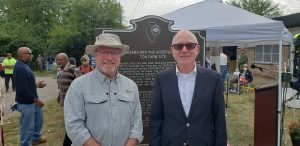
The unveiling ceremony dedicated this land. Dignitaries spoke. Beautiful songs were raised. On behalf of Jan and Aagje, I was honored to be a part of it. I never knew them, but my heart tells me they would have been “embarrassed for all the fuss.” They were just doing what they knew to be right in their hearts for other men, women, and children traveling this life. Standing on Hallowed Ground

The marker will serve as a reminder of what happened there. To those who visit, I encourage you to walk the grounds with a sense of remembrance. Feel the emotions. Connect with the people who made this ground hallowed…those seeking freedom…and those lending a helping hand toward that freedom. 

Standing on Hallowed Ground

The author, left and The Netherlands Consul General Bart Twaalfhoven

Hallowed ground, indeed! 


In researching the concept of hallowed ground for this post, I came across Standing on Hallowed Ground: Practicing the Morality of Remembrance by Dr. Maulana Karenga. His words describe hallowed grounds in a way that moved me. Please click through and read it!