
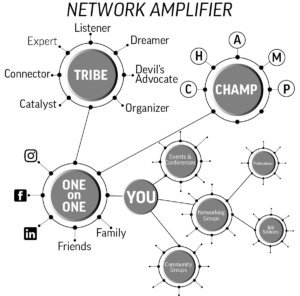
The Network Effect is commonly applied to business and economics to describe the effect on the value of a product or service by adding more users of the product or service. There are great examples of the network effect all around us. Think of the value of Facebook or LinkedIn if only a handful of people belonged. Think of the value of your phone if there was no one else to call.
The network effect can also be applied to, well, you! The broader and more diverse your network is, the more valuable it becomes…to you…and everyone you are connected with. Nowhere is this more apparent than when you are involved in a job search. Speaking from personal experience, I did not fully understand the value of a network until…I needed one!
What’s the connection between networking and being in transition? Over 85% of all jobs filled today can be attributed to the candidate having a network connection into the organization. That connection may have let them know of the opening (hidden job market). They may have provided a warm introduction to someone in the company, perhaps even the hiring manager. They may have sent a recommendation to the hiring manager, HR department, or an influencer within the organization.
Networking: Getting Started
Networking of this type may not come naturally to you. I know it did not to me! One of the best secrets I learned is it’s not about you. Even if you are in transition. Even if you are seeking your next gig. It’s about the other person. You are not reaching out to ask them for a job. Take that pressure off yourself! Reach out seeking to learn. You want to learn about their job, their company, their industry. Ask them questions like, “Tell me about your role with XYZ company, What led you to that position?” Get them talking.
Of course, you will need to share a bit about you and your career journey, but don’t make it a monologue. Tell your story…briefly. When you are in transition, you will want to include two “asks” in every networking conversation you have. Always ask what you can do for them. You may not think you are in a position to help, but you are. Even if they answer with nothing, think of a connection, think of a relevant book, recommend a relevant podcast. The second ask should be “Is there anyone else in your network I should be talking to?” Your goal is to come away with introductions to two or three people.
Network while in transition
In my book Amplify Your Job Search: Strategies for Finding Your Dream Job, I provide guidance for building or expanding your professional network. There are several ways to quickly build connections. Look for industry groups in your area, for example. They may not be conducting face-to-face meetings in this environment, but they certainly have virtual meetings you can attend and meet other professionals. Many cities have groups specifically for job seekers. Locate those groups and start attending meetings. You will meet others. This will not only expand your network, but they will provide reassurance that you are not in this alone.
Think about groups you already belong to such as church groups, civic organizations, hobby clubs. All of these groups provide opportunities to meet others and grow your professional network. They also provide common interests for those awkward initial conversations.
Of course, social media provides key platforms to connect with other professionals. LinkedIn can be a goldmine for networking. Reach out and make new connections. Invite them to coffee (virtual or otherwise). You will be surprised at the number of people who will want to help.
Tribes and networking
Networking can sometimes feel a bit random. To help guide you in developing a strong network I recommend two resources. The first is Igniting the Fire Starter by Jason Barnaby. In his book, Barnaby describes the essential roles we all need in our immediate network, or “tribe” as he calls it. These roles include The Listener (someone who is a good listener), The Dreamer (someone who asks “what if”), The Devil’s Advocate (someone who points out potential traps), The Organizer (someone who helps think through the “this before that”), The Catalyst (someone who gives a kick in the pants when we need one), The Connector (someone who loves to make introductions), and The Expert (someone who has “been there done that”). Check out Jason’s website at www.firestartertribe.com to learn more and to download the free Tribal Inventory.
Diversify Your Net
Think about your network. Does everyone look like you? Do they sound like you? Is everyone thinking like you? If so, you need to diversify your network. In her book, Network Beyond Bias, author Amy Waninger, provides two great tools for identifying the gaps in your network. The first is CHAMP. Who in your network fits the CHAMP roles? C is for your customer, H is someone you would hire or recommend to be hired, A is for associate, someone in your peer group, M is for a mentor, and P is for protege (who do YOU mentor?).
The second tool is the IGGNORE matrix. Who in your network is in a different Industry? Who is in a different Generation? Is there someone of a different Gender? How about Nationality? Are there people in your network with a different sexual Orientation than yours? Are different Races represented? With whom in your network have you Exchanged personal stories, not just pleasantries?
If you have gaps in your tribe, CHAMP or IGGNORE networks be intentional about filling those gaps. It will broaden your perspectives and insights. It will also open up other opportunities in your search that you may not have even known existed.
Find Amy’s work at www.LeadAtAnyLevel.com to learn more about her valuable work!
Why Network
Finding your next opportunity is only a small part of why you need a vibrant professional network. Having a vibrant and diverse network dramatically expands your knowledge. As you exchange insights across your network you will be exposed to a vast pool of thought, perspectives, and opinions. The more you give to this network, the more the network will return to you! THAT is the network effect!
I’ve written more on the power of a professional network check out some here: Network (admittedly some of these are about that other kind of networking)


 business, Confluence Dynamics, a green business consulting firm. I added clients and colleagues in the “green” industry to the list. One of my first clients (perhaps my first) was
 I’d like to give you a new image to consider for living on the edge. Many of you who know me, know I am a river rat. I would rather be canoeing a river than doing just about anything else on the planet. A technique for making your way downstream in turbulent waters is to use the eddies, those calm areas of water that form behind an obstruction. A canoeist or kayaker can enter the eddy, rest, regather, regroup, and scout the river ahead.
 31 of the 42 Division Commanders were replaced during or after the Louisiana Maneuvers. Among those new leaders? Dwight D. Eisenhower.
 (You knew they’d be in here somewhere, didn’t you?)
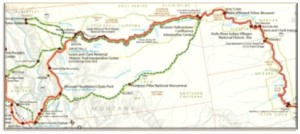 Pretty significant risk, wouldn’t you say? Dividing what was already a small Corps into four smaller teams and heading out into the still very much unknown? Call it taking risks, call it taking initiative. To be a leader, we have to know when to take these types of educated risks. History does not tell us about Jefferson’s reaction to this risk, nor do we know the “what ifs”. The decision could have lead to untold catastrophes. How would Jefferson have reacted if their journals had been destroyed, or if they had lost some of the precious discoveries, or if some of them had been killed? As leaders, not only do we have to be willing to take risks, but we have to provide an environment and a culture for our employees, leaders and future leaders, to be able to take risks, to be able to fail, and to be able to succeed.
 Over the last several months, I have been struggling with the decision to leave a job that I love and to embark on a journey down a new stretch of river. Yes, I am leaving the role of CIO for Goodwill Industries of Central Indiana to join


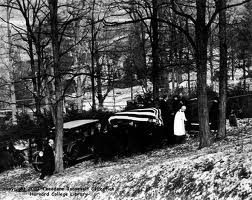 It was a cold, gray January day. The wind picked up the dusting of snow from the ground and flung it into their faces, stinging like needles. Tears froze to wind burned cheeks. The casket was slowly lowered into the frozen ground. A lone bugler played taps. Slowly, one by one, the people who had gathered, made their way down the 26 steps, down the long hill, and out of the cemetery until a lone figure remained. He stood motionless. His gaze locked on the hole before him. Tears stained his ruddy cheeks. His long coat flapped in the wind. His lips moved as if talking. Was he saying goodbye? Was he saying a prayer? Was he saying words of forgiveness to his now dead friend?